Siddhāsana, the accomplished pose
5 min read · Updated October 20, 2026 · sources checked October 20, 2026 · Editorial: The Yogide team
- Sanskrit
- सिद्धासनSiddhāsana
- Meaning of the name
- Accomplished or perfect pose: siddha, accomplished, perfected, also an adept, and āsana, seat
- Level
- Intermediate
- Family
- Seated
- In the texts
- Hatha Yoga Pradipika 1.35-45 (Pancham Sinh, 1915); Gheranda Samhita 2.7 (Vasu)
In short
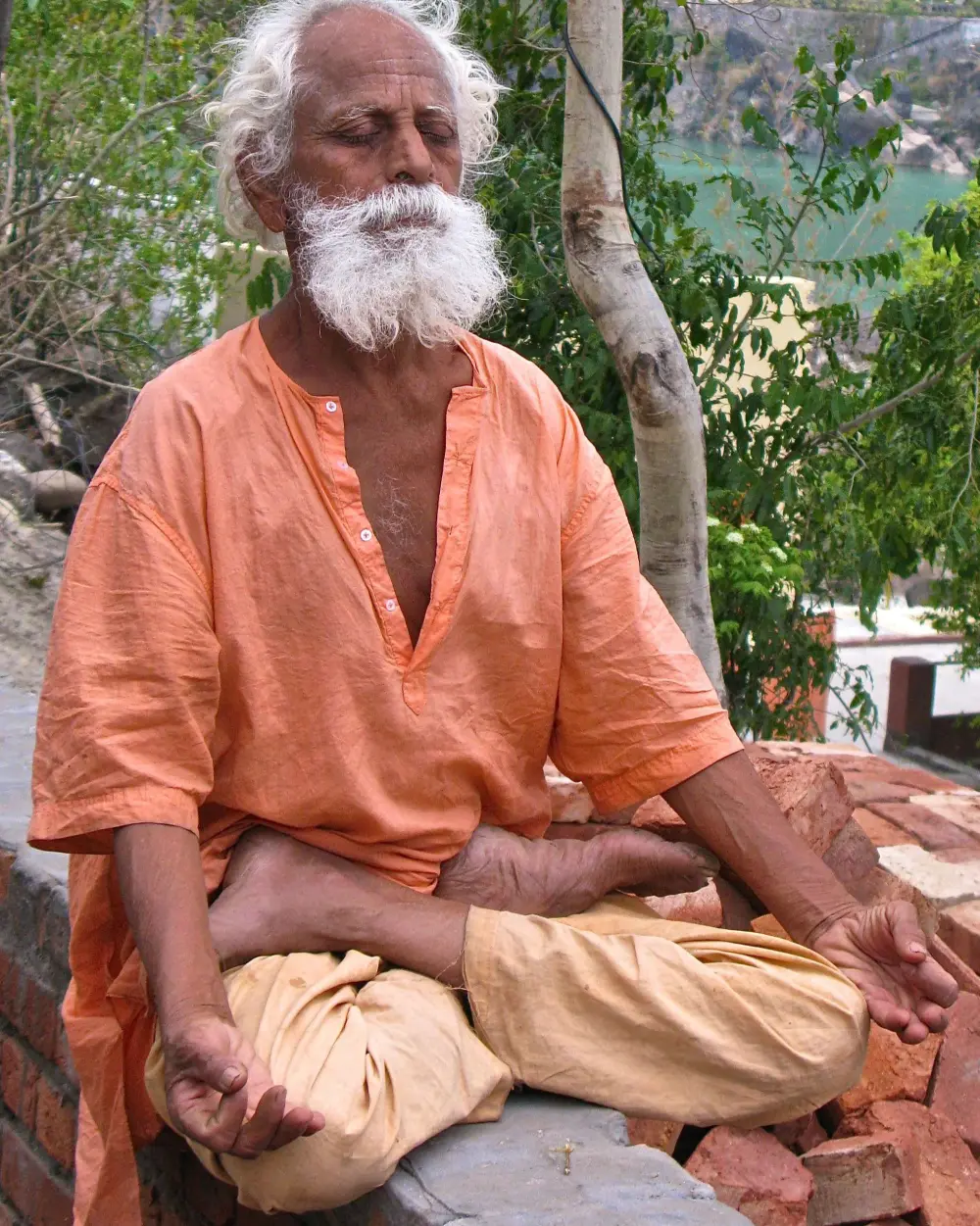
Siddhāsana, the accomplished pose, is a cross-legged meditation seat: one heel presses the perineum, the other rests just above the pubic bone, the toes of the upper foot tuck between calf and thigh, and the spine stays upright. The Hatha Yoga Pradipika (1.35-45) calls it the foremost of all postures.
Of the eighty-four postures taught by Śiva, the Hatha Yoga Pradipika keeps four as essential, and of those four it puts one above all: siddhāsana. For its author, a yogi who has mastered this seat hardly needs any other. It is a seat for sitting still, for breathing practice and for meditation, and it asks for hips, knees and ankles that are ready for it.
Steps
- Warm up the hips first: a few minutes of the easy pose and gentle hip openers.
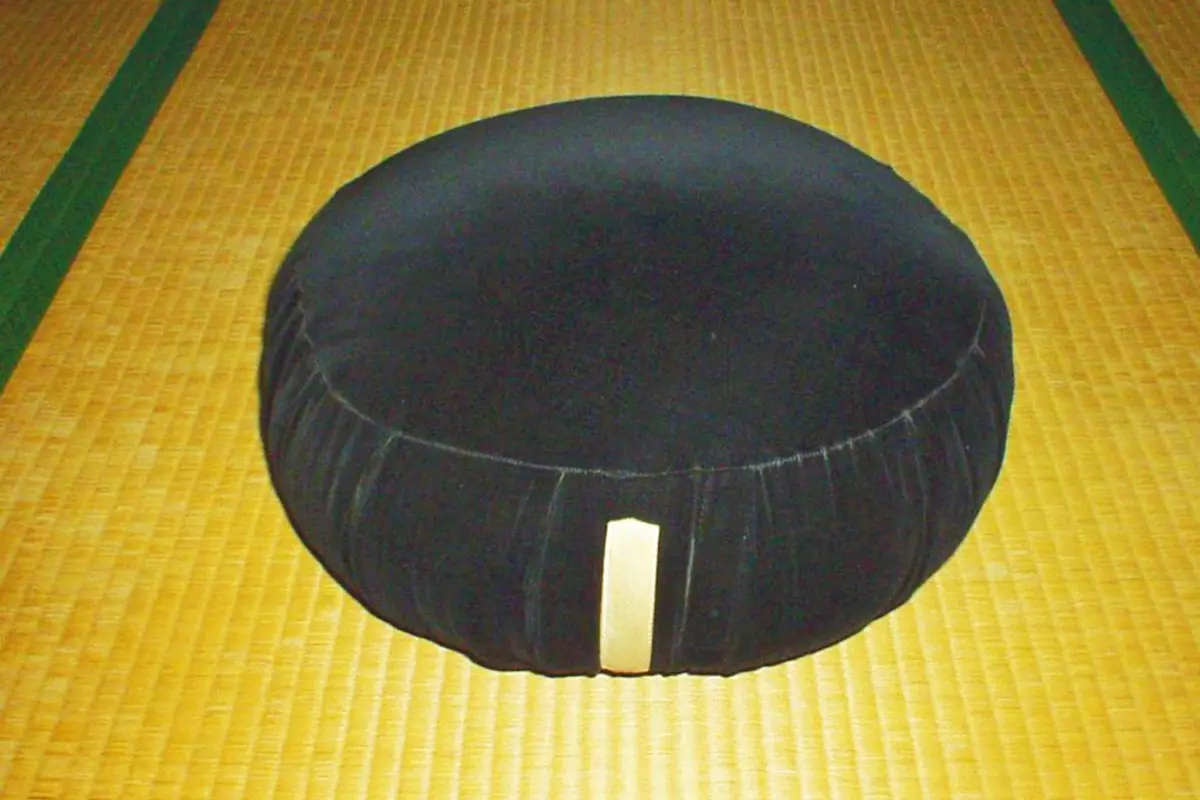
- Sit on the front edge of a folded blanket or a firm cushion, legs stretched forward.
- Bend the left knee and place the left heel against the perineum, the area between the anus and the genitals, the sole along the inside of the right thigh.
- Bend the right knee and place the right heel just above the pubic bone, directly over the left heel, the ankles touching.
- Tuck the toes of the right foot into the fold between the left thigh and calf. If you can, draw the toes of the left foot up into the fold of the right leg.
- Let both knees rest on the floor or on supports. Lengthen the spine, relax the shoulders, place the hands on the knees.
- Breathe calmly through the nose. Stay a few minutes, then come out slowly, stretch the legs, and next time place the other leg below.
Alignment
- The pelvis is upright and raised enough on the cushion for the knees to come down.
- The heels are stacked one above the other in the midline of the body.
- The spine rises straight; the head sits above the pelvis.
- The weight is on the sitting bones, not on the lower heel.
Variations
- Half siddhāsana (often called muktāsana): the lower heel at the perineum, the other foot resting on the floor in front of it, not on top. Much easier on the ankles.
- Higher seat: a thicker cushion until the knees rest lower than the hips.
- Knee supports: a folded blanket under each knee.
- Svastikāsana: each foot tucked between the opposite thigh and calf, without pressing the perineum.
- For women: some modern schools teach siddha yoni āsana, the same seat adapted to a female body.
- Simpler seats: sukhāsana, vajrāsana, or a chair. The aim is a steady, comfortable seat, not this shape at any cost.
Contraindications
- Knee injury, meniscus or ligament problem, recent knee surgery: avoid.
- Ankle injury or very stiff ankles: use the half version or another seat.
- Hip pain or hip replacement: ask your surgeon or physiotherapist.
- Sciatica or tingling in the legs: avoid long sittings; change seat as soon as numbness appears.
- Pain or numbness in the perineum: lessen the pressure of the lower heel or choose another seat.
In the texts
Siddhāsana is classical, and the Hatha Yoga Pradipika gives it more space than any other posture: a whole section of eleven verses (1.35-45, the same numbering in Pancham Sinh's 1915 translation and in the GRETIL text). After saying that Śiva taught eighty-four postures and that four are essential, siddha, padma, siṃha and bhadra (1.35-36), it describes the seat:
योनिस्थानकमङ्घ्रिमूलघटितं कृत्वा दृढं विन्यसेत् मेण्ढ्रे पादमथैकमेव हृदये कृत्वा हनुं सुस्थिरम् । स्थाणुः संयमितेन्द्रियोऽचलदृशा पश्येद्भ्रुवोरन्तरं ह्येतन्मोक्षकपाटभेदजनकं सिद्धासनं प्रोच्यते ॥
yoni-sthānakam aṅghri-mūla-ghaṭitaṃ kṛtvā dṛḍhaṃ vinyaset meṇḍhre pādam athaikam eva hṛdaye kṛtvā hanuṃ susthiram | sthāṇuḥ saṃyamitendriyo'cala-dṛśā paśyed bhruvor antaraṃ hy etan mokṣa-kapāṭa-bheda-janakaṃ siddhāsanaṃ procyate ||
Pressing the perineum firmly with the heel of one foot, one should place the other foot above the sexual organ; with the chin held firm on the chest, motionless as a post, the senses restrained, one should look with an unmoving gaze at the point between the eyebrows. This is called siddhāsana, which breaks open the door of liberation.
The following verses give a variant with the feet stacked above the sexual organ (1.38) and the other names of the seat (1.39): some call it vajrāsana, others muktāsana or guptāsana. Then come the praises: it is to postures what moderate eating is to the restraints (1.40); it cleanses the impurities of the seventy-two thousand channels, the nāḍīs (1.41); practised for twelve years with a sparing diet, it brings the yogi to completion (1.42); once it is mastered, "what is the use of many other seats?" (1.43). The section closes with this verse:
नासनं सिद्धसदृशं न कुम्भः केवलोपमः । न खेचरीसमा मुद्रा न नादसदृशो लयः ॥
nāsanaṃ siddha-sadṛśaṃ na kumbhaḥ kevalopamaḥ | na khecarī-samā mudrā na nāda-sadṛśo layaḥ ||
There is no posture like siddha, no breath retention like kevala, no seal equal to khecarī, no absorption like that in the inner sound.
The Gheranda Samhita (2.7) repeats the description of 1.37 almost word for word. The cleansing of the nāḍīs and the twelve years are the text's own claims, framed in its subtle anatomy; they are not medical facts. What the instructions add to a modern practice is concrete: the chin on the chest is a form of jālandhara bandha, and the gaze between the eyebrows is described on the shambhavi mudra page.
Related postures
Seats for meditation: sukhāsana, vajrāsana and the lotus, the second of the four essential seats. Siddhāsana is the traditional seat for prāṇāyāma and for mula bandha. The text it comes from: the Hatha Yoga Pradipika. All the cards: the asanas chapter.
Questions people ask
What does siddhasana mean?
Siddha (सिद्ध) means accomplished, perfected, and also an adept who has reached the goal of practice; āsana means seat. Siddhāsana is the seat of the accomplished, or the accomplished seat. The Hatha Yoga Pradipika says the adepts consider it the chief of all postures.
Is siddhasana the same as vajrasana or muktasana?
The Hatha Yoga Pradipika (1.39) says some call siddhāsana vajrāsana, others muktāsana or guptāsana. Today vajrāsana usually means the kneeling seat of the Gheranda Samhita, and muktāsana often names an easier variant with both feet on the floor.
How long can I sit in siddhasana?
Start with a few minutes, on a cushion, changing the leg in front each day. Lengthen the time only while knees, ankles and the perineum stay free of pain and numbness. The text's twelve years of practice describe a lifetime, not a session.
Can women practise siddhasana?
Yes. The verse is written for a male body; the same seat practised by women is sometimes called siddha yoni āsana in modern teaching. Comfort and steadiness are the guide, and the half version suits many people better.
Practise gently and within your limits. Yoga is learnt best with a qualified teacher; this page does not replace one.
Sources
- Svātmārāma, Haṭhayogapradīpikā, Sanskrit text, 1.35-1.45 (GRETIL, University of Göttingen) checked October 20, 2026
- The Hatha Yoga Pradipika, translated by Pancham Sinh (Allahabad, Panini Office, 1915; later reprint), 1.35-45, Internet Archive checked October 20, 2026
- Gheraṇḍasaṃhitā, Sanskrit text, 2.7 siddhāsana (GRETIL, University of Göttingen) checked October 20, 2026
- The Gheranda Samhita, translated by Srisa Chandra Vasu (Sacred Books of the Hindus, vol. XV, Panini Office, 1914-1915), 2.7, Internet Archive checked October 20, 2026
- Siddhasana, Wikipedia (Goraksha Sataka, muktāsana and ardha siddhāsana, siddha yoni āsana) checked October 20, 2026