यात्राyātrā · journey, pilgrimage
Mexico for yogis, Tulum and the Maya land
Updated October 21, 2026 · sources checked October 21, 2026 · Editorial: The Yogide team
In short
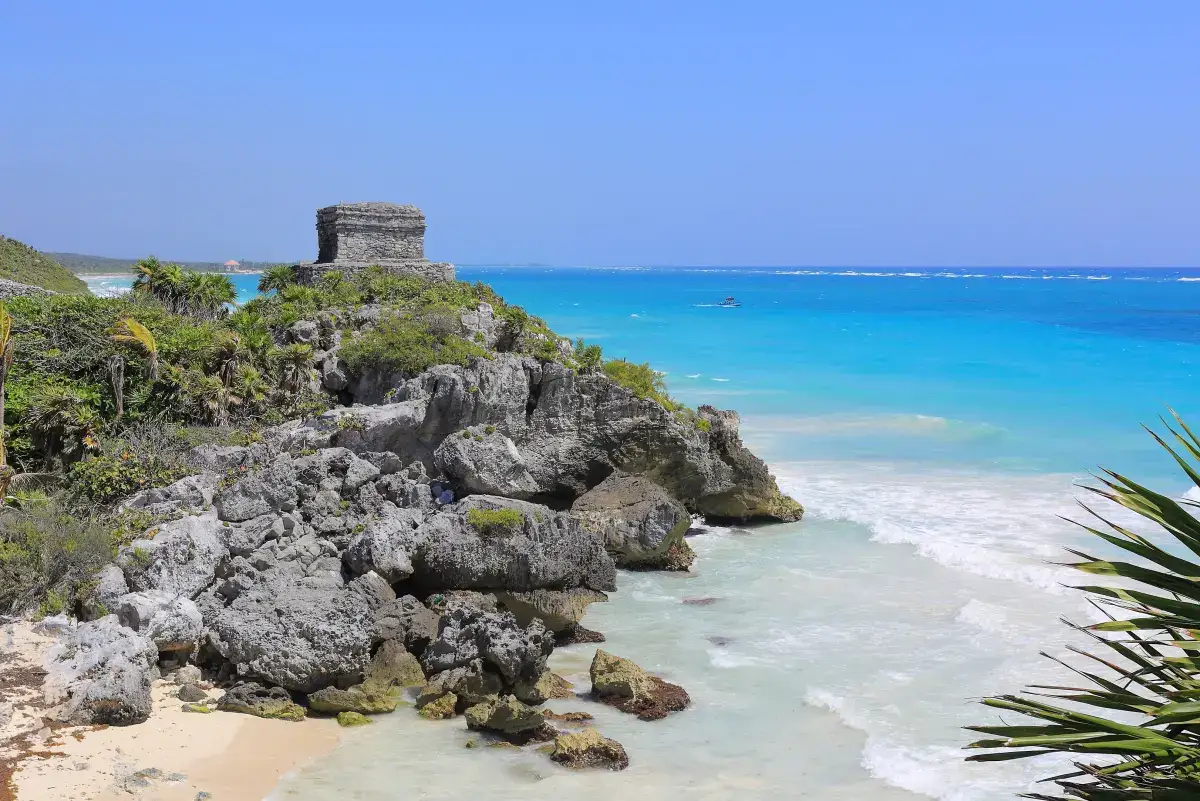
Mexico has no Indian yoga lineage, but the Yucatán has a sacred landscape of its own, Maya cities such as Tulum, Cobá and Chichén Itzá, and cenotes once used for offerings. The yoga retreats around Tulum are modern and international. Tourists from the UK, EU and US need no visa; plan for the Quintana Roo tourist tax and the 1 June to 30 November hurricane season.
Why come here for yoga
Mexico is not a birthplace of yoga, and no ashram here carries an Indian lineage that goes back centuries. What draws yogis to the Yucatán Peninsula is something else, and it deserves honesty: a sacred landscape of its own. Maya cities stand above the Caribbean and in the forest, and thousands of cenotes, natural wells in the limestone, were the only fresh water of a land with no surface rivers. The Maya used them for water and, at times, for offerings.
Around Tulum, on the coast of Quintana Roo, you will find many yoga studios, retreats and teacher trainings, almost all modern and international in style, taught in English. They are not Maya, and they are not Indian. Judge each one on its teachers, not on its jungle setting.
There is one real thread between India and Mexico in the history of modern yoga. Indra Devi, an early disciple of T. Krishnamacharya, accepted as his student at the Mysore Palace in 1938, later ran a yoga foundation on a ranch in Tecate, Baja California, from 1961 to 1977 (Wikipedia). Tecate is far from Tulum, and today the UK government advises against all but essential travel there; it is history, not a destination. If you want the source of that lineage, it is in Mysore and in Ashtanga yoga.
What Mexico offers the practitioner is a place to keep a daily practice in a culture that has its own relation to the sacred: Maya ruins at dawn, the cenotes, the temazcal steam bath of Mesoamerican tradition, and, in Yucatán, Hanal Pixán, the Maya and Catholic Day of the Dead, from 31 October to 2 November.
Sacred places
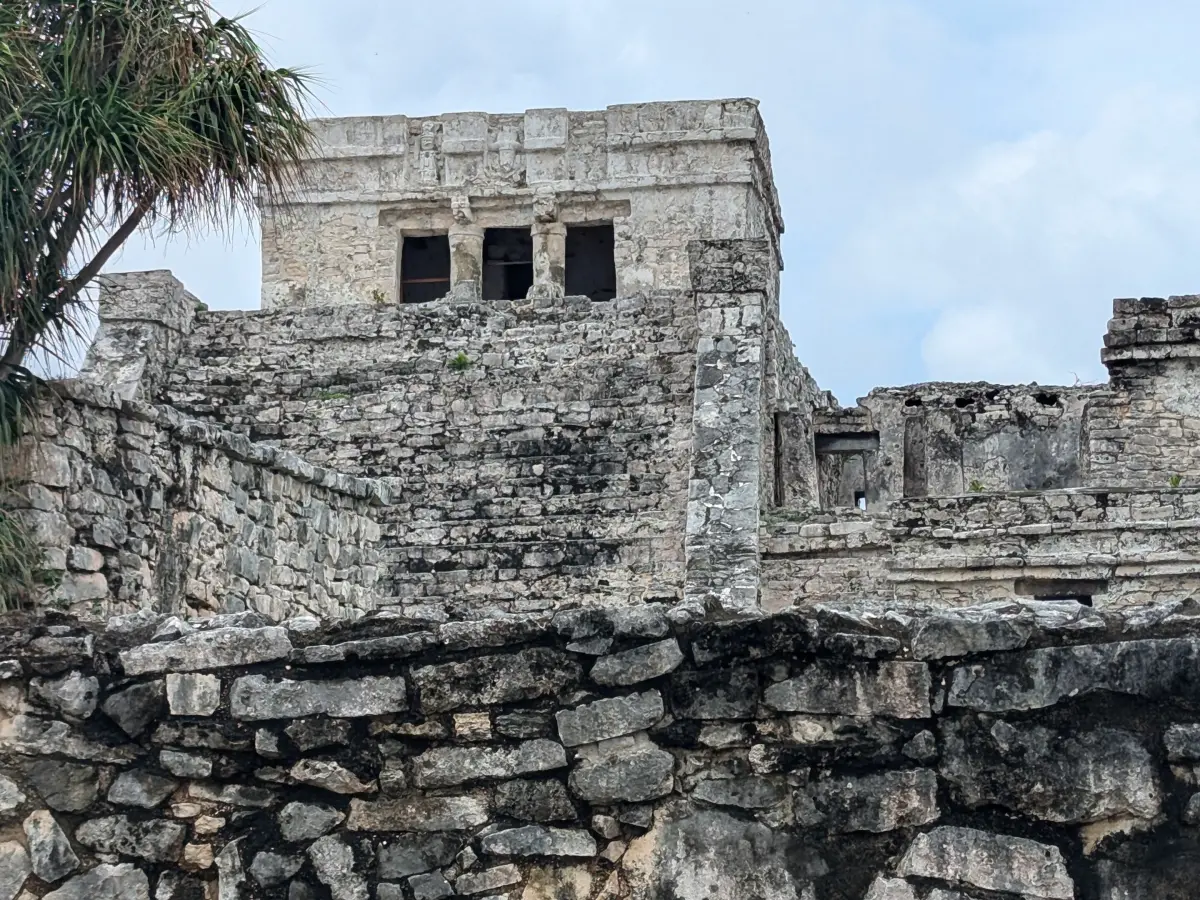
- Tulum archaeological zone: a walled Maya port on cliffs above the Caribbean. INAH, the national institute of anthropology and history, calls it the third most visited pre-Columbian site in Mexico, with more than 3,000 visitors a day (INAH bulletin, February 2025). It lies inside the Parque del Jaguar, where two other bodies charge their own fees.
- Cobá, inland: a Maya city of raised white roads, the sacbeob. INAH dates its height to AD 200 to 600 and its founding, from inscriptions, to 12 May 569. On 7 December 2025 a new staircase reopened the Nohoch Mul, 42 metres high, to climbing after six years (INAH). Check the current rules on the day.
- Chichén Itzá, in Yucatán state, a UNESCO World Heritage site since 1988, with the Temple of Kukulcán and the Sacred Cenote. Around the equinoxes, a serpent of light and shadow appears on the north balustrade in the afternoon; INAH runs a special visitor operation then.
- Cenotes across the peninsula, each with its own rules posted at the entrance.
INAH's notice for Chichén Itzá states that ceremonies are not allowed without a permit from its legal department, that tripods, drones and professional cameras need prior authorisation, and that smoking, alcohol and fires are forbidden. Roll out your mat elsewhere.
When to go
The Yucatán has a tropical wet and dry climate. In Mérida the rainy season runs from June to October (Wikipedia, from Servicio Meteorológico Nacional data); on the coast the drier months run roughly November to April. Two seasons matter more than rain:
- Hurricanes: the official Atlantic season runs from 1 June to 30 November, with a peak around 10 September and most activity from mid-August to mid-October (US National Hurricane Center). Follow local authorities and any evacuation order.
- Sargassum: this brown seaweed from the tropical Atlantic has reached Caribbean beaches in nearly every spring and summer since 2011, except 2013, according to the University of South Florida's Sargassum Watch. Its September 2026 bulletin reports amounts declining but still high for the month. Check the monthly bulletin before you book a beach retreat.
For many practitioners, December to April is the simplest window. Late October to early November brings Hanal Pixán in Yucatán.
Getting there
- By air: Cancún International Airport is the main gateway of the region; Tulum International Airport (Felipe Carrillo Puerto) lies about 20 km south-west of Tulum.
- By train: the Tren Maya runs from Cancún airport around the peninsula, with stations including Tulum and Chichén Itzá; check timetables on the official Tren Maya website.
- Entry: tourists from the UK, the EU and the US need no visa. The UK government says you receive a stamp or, at airport e-gates, a ticket showing how many days you may stay: keep it, you must show it when you leave. You may be asked for a return ticket, an accommodation booking and proof of funds. France Diplomatie gives a 180-day ceiling for French tourists.
- Carry your passport: both governments say officers may ask for the original passport and proof of legal stay; copies are not accepted.
- No work as a tourist: no paid or voluntary activity is allowed on a tourist entry (FCDO, France Diplomatie). That includes teaching yoga.
Budget
We print no retreat prices. Here is what official sources state, with their dates:
| Item | Amount | Source |
|---|---|---|
| Quintana Roo tax for foreign tourists (VISITAX) | Shown when you pay on the official portal | visitax.gob.mx; FCDO |
| Tulum archaeological zone (INAH) | 100 pesos | INAH, 14 February 2025 |
| Parque del Jaguar fees, foreigners (two other bodies) | 415 pesos | INAH, 14 February 2025 |
| Chichén Itzá, foreigners (INAH + Yucatán state) | 671 pesos | INAH, 18 September 2025 |
| Replacing a lost entry stamp | About 700 pesos | FCDO, 2026 |
Fees change: confirm at the official ticket office. The FCDO notes that vaping or smoking in a public place can be fined up to 3,000 pesos.
Etiquette
- In ruins: stay on paths, do not climb closed structures, no ceremonies, no posed practice on monuments.
- In cenotes: follow the rules at the entrance; in the Yucatán, cenotes are the region's fresh water.
- In Maya villages: ask before photographing people. A few words help: Bix a beel? (How are you?), Nib óolal (Thank you), in Yucatec Maya.
- Ceremonies sold as "Maya" or "shamanic": ask who leads them and for which community. A tradition is not a product.
Health and safety
Read the UK FCDO advice (updated 20 October 2026), France Diplomatie or the US State Department's state-by-state advisory before you go. The FCDO asks visitors to be very cautious after dark in downtown Cancún, Tulum and Playa del Carmen, where rival gangs have clashed and shootings have affected tourists since 2021. France Diplomatie also reports extortion by local police in Tulum: never pay a fine to an officer who cannot give a receipt, and call 911, the national emergency number.
The FCDO warns that "spiritual cleansing" ceremonies with ayahuasca, yagé or bufo (DMT, 5-MeO-DMT) are marketed to tourists; assaults, robberies, serious illness and deaths have been reported, and jungle retreats are often far from medical care. For mosquitoes, both governments list dengue, Zika and chikungunya; the CDC does not list Quintana Roo or Yucatán among Mexico's malaria areas. Drink bottled or boiled water. Beaches are often unpatrolled. Medical care is costly: take insurance that covers care and repatriation.
Choosing a retreat or a training here
Ask, in writing:
- Who teaches, from which lineage, trained where, for how long? Will that person teach you?
- What is the daily programme: āsana, prāṇāyāma, meditation, philosophy, silence?
- Does the programme include a temazcal, cacao or "plant medicine" ceremony? Who leads it, and is it optional? Refuse any psychoactive substance.
- What is the plan for a hurricane, an injury or a medical emergency, and how far is the nearest hospital?
- Which visa do foreign teachers and trainees use?
- What certificate will you receive? Read what Yoga Alliance checks and does not check, and our page on the 200-hour teacher training.
Red flags: Maya or Indian "secrets" in a weekend, healing promises, cash only, pressure to sign today. For yoga at its source, see Rishikesh; compare with Thailand and Bali on our yoga travel page.
Questions people ask
Do I need a visa to do a yoga retreat in Tulum?
Not as a tourist from the UK, the EU or the US: the UK government says you get a stamp or e-gate ticket showing how many days you may stay, and France Diplomatie gives a 180-day ceiling for French tourists. Tourists may not do any paid or voluntary work, so a teacher who wants to teach needs the right visa from a Mexican consulate before travelling.
Which months suit a yoga trip to Tulum?
There is no single right month. The drier months run roughly from November to April. The official Atlantic hurricane season is 1 June to 30 November, peaking around 10 September (US National Hurricane Center), and sargassum seaweed has reached Caribbean beaches in nearly every spring and summer since 2011 (University of South Florida). Many practitioners choose December to April.
Can I do yoga or a ceremony inside the Maya ruins?
Ceremonies are not allowed in INAH archaeological zones without a permit from INAH's legal department, and tripods, drones and professional cameras also need prior authorisation, according to INAH's 2025 notice for Chichén Itzá. Practise outside the sites, and visit the ruins as a respectful visitor.
Is a temazcal safe?
A temazcal is a very hot, humid, low steam room, a real Mesoamerican tradition still used in central and southern Mexico. If you are pregnant, have a heart or blood-pressure condition or take regular medication, ask your doctor before going in, and leave at once if you feel unwell.
Want to go and practise yoga there?
Tell us where, when and how you practise. Every request is read by a person and answered by email. No automated email, no commission, no promise of a price or a partner.
Sources
- Mexico travel advice — UK Foreign, Commonwealth & Development Office (updated 20 October 2026) checked October 21, 2026
- Mexico entry requirements — UK FCDO (entry stamp, e-gate ticket, Quintana Roo entry tax) checked October 21, 2026
- Mexico safety and security — UK FCDO (Tulum after dark, spiritual cleansing ceremonies, hurricanes) checked October 21, 2026
- Mexico getting help — UK FCDO (emergency number 911) checked October 21, 2026
- Mexique, entrée et séjour — France Diplomatie (updated 15 September 2026; 180 days for French tourists) checked October 21, 2026
- INAH bulletin 81, 14 February 2025: the Tulum archaeological zone and the Parque del Jaguar fees checked October 21, 2026
- INAH bulletin 464, 18 September 2025: Chichén Itzá equinox operation, ceremonies and fees checked October 21, 2026
- INAH bulletin 657, 7 December 2025: new staircase on the Nohoch Mul at Cobá checked October 21, 2026
- Tropical cyclone climatology — US National Hurricane Center, NOAA (Atlantic season 1 June to 30 November) checked October 21, 2026
- Sargassum Watch System and monthly outlook bulletins — Optical Oceanography Lab, University of South Florida (September 2026 bulletin) checked October 21, 2026
- Temazcal — Wikipedia (Mesoamerican sweat lodge; see also UNAM's Diccionario Enciclopédico de la Medicina Tradicional Mexicana) checked October 21, 2026
- VISITAX — official payment portal of the Quintana Roo tax for foreign tourists (SATQ) checked October 21, 2026
- Mexico, traveler view — US Centers for Disease Control and Prevention (malaria areas updated 23 April 2025) checked October 21, 2026
- Indra Devi — Wikipedia (Krishnamacharya's student in Mysore, foundation in Tecate, Mexico, 1961-1977) checked October 21, 2026