यात्राyātrā · journey, pilgrimage
Portugal for yogis, a quiet Atlantic edge of Europe
Updated October 21, 2026 · sources checked October 21, 2026 · Editorial: The Yogide team
In short
Portugal has no ancient yoga lineage, but it has a quiet contemplative heritage, from the cork-lined Franciscan convent of the Capuchos in Sintra to the shrine of Fátima, and an organised yoga community whose long-time president received India's Padma Shri in 2015. It is in the Schengen area: British and American visitors stay up to 90 days in 180 without a visa.
Why come here for yoga
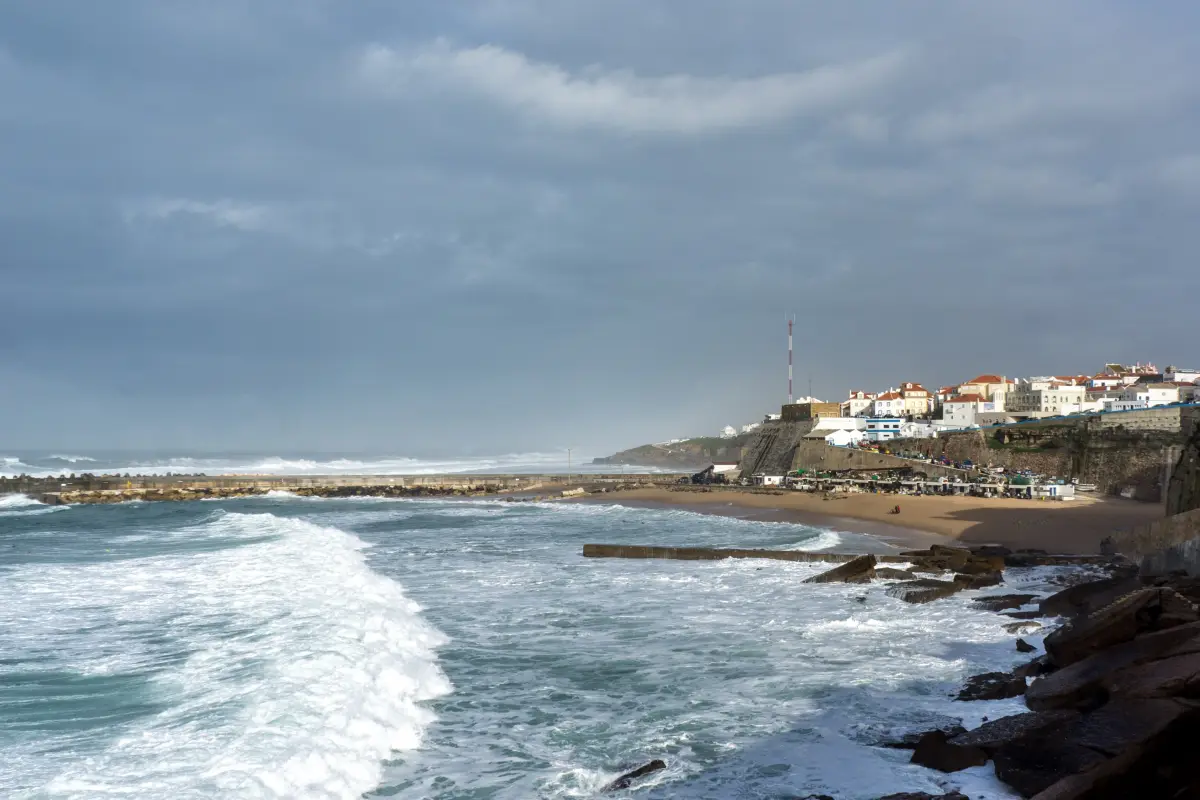
Be clear about what Portugal is and is not. Yoga was not born here, and no ancient Indian lineage grew up on these shores. What draws practitioners is quieter: a mild Atlantic light, long beaches, a deep Catholic and monastic heritage, and a small but organised yoga world of its own.
That world has an Indian connection you can check. The Confederação Portuguesa do Yoga was long presided over by Jorge Veiga e Castro, known by his initiatory name Amrta Sūryānanda Mahā Rāja, who learned yoga in his twenties from a teacher of the Sivananda Ashram in Rishikesh and whom the Government of India honoured with the Padma Shri in 2015 (Wikipedia; Diário de Notícias). In 2021 the Lusa news agency named Sandra Xavier as the confederation's president. If you travel in June, the International Day of Yoga falls on the 21st, as everywhere. The Sivananda Yoga Vedanta organisation also lists, on its official site, an affiliated centre in Lisbon; read our page on Sivananda yoga to know what that lineage teaches.
Most retreats and teacher trainings advertised in Portugal, around Ericeira, Sintra, the Alentejo and the Algarve, are modern and international. Choose them for their teachers, not their view of the ocean.
Sacred places
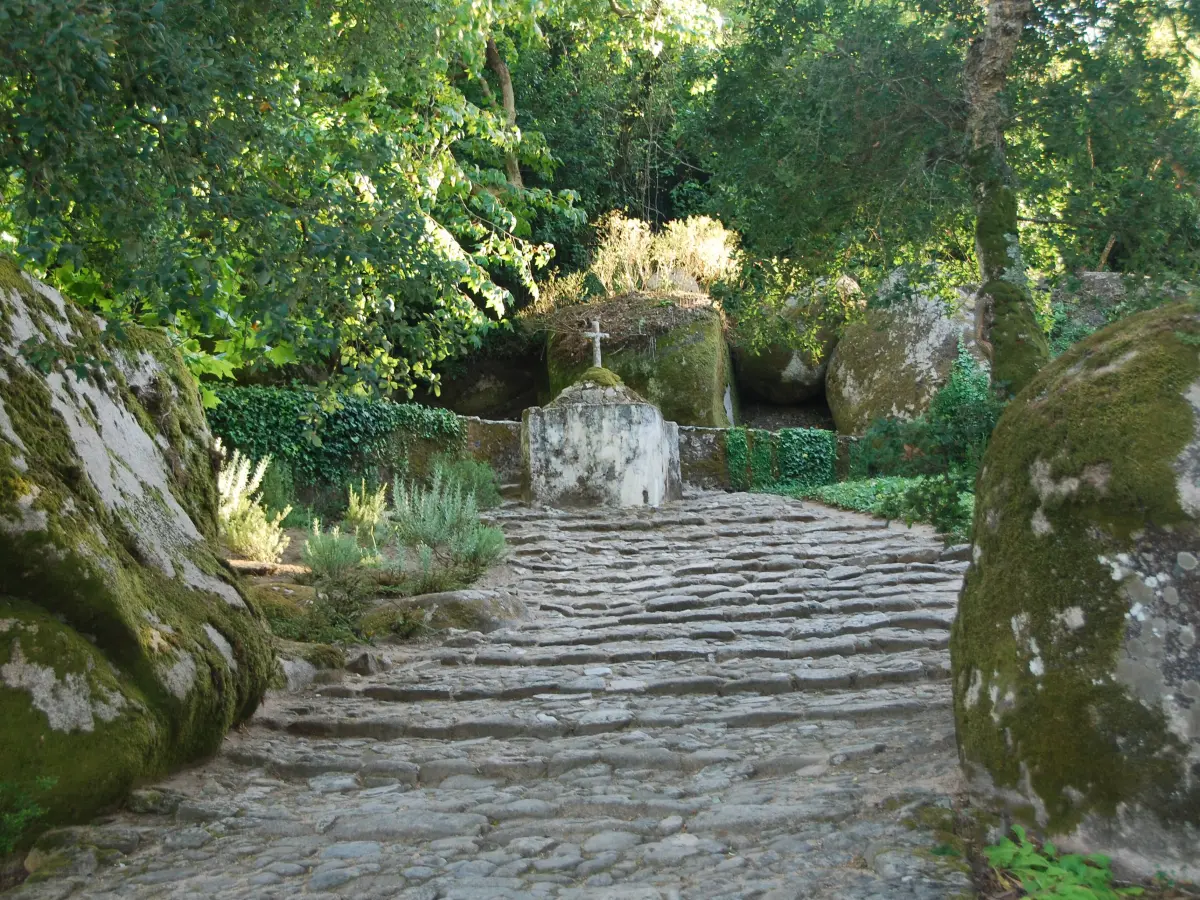
- Convent of the Capuchos, Sintra. A tiny Franciscan friary, founded in 1560 by Álvaro de Castro after a vow of his father, who dreamed of "a modest place of worship… dedicated to practices of contemplation and introspection". Cork was used profusely as a finishing material, hence its other name, the Convent of Cork; Franciscan friars lived there for about two and a half centuries. It belongs to the Cultural Landscape of Sintra, a UNESCO World Heritage site since 1995 (Parques de Sintra). For a yogi it is a lesson in simplicity: a cave where, legend says, Brother Honório spent his last decades on bread and water.
- Fátima. At the Cova da Iria, three shepherd children, Lúcia, Francisco and Jacinta, reported apparitions of the Virgin Mary from 13 May to 13 October 1917, according to the shrine's official narrative. The Chapel of the Apparitions is a place of prayer for millions of Catholic pilgrims; visit it as such.
- Cape St Vincent (Cabo de São Vicente). The south-western tip of mainland Europe, near Sagres. The Romans called it Promontorium Sacrum, the holy promontory, and menhirs nearby show it was revered in the Neolithic.
- Almendres Cromlech, near Évora. The largest group of standing stones in the Iberian Peninsula, begun in the 6th millennium BC: a place to sit in silence at dawn.
- The Portuguese Way to Santiago. Pilgrims walk north from Lisbon or Porto to Santiago de Compostela in Spain; see our page on Spain for the Compostela rules.
When to go
Lisbon has a Mediterranean climate: mild, rainy winters and warm to hot, dry summers. In January daytime highs run about 14 to 19 °C, in August 25 to 32 °C; November and December are the wettest months and the sea stays cool, about 16 °C in winter and 20 °C in summer (Wikipedia, Lisbon climate). Sintra and the coast are often cooler than the city.
Two official warnings shape the calendar. The UK government notes a high wildfire risk from April to October and higher-than-normal temperatures in summer. And from 1 June to 30 September it is strictly forbidden to light any fire in forest areas, barbecues included (France Diplomatie). Spring (March to May) and autumn (late September to November) are the gentlest seasons for a retreat. Check forecasts and fire risk on the Portuguese Institute for Sea and Atmosphere (IPMA).
Getting there
- By air: Lisbon Humberto Delgado, Porto and Faro (Algarve) are the main airports. Sintra is reached from Lisbon by the CP Sintra train line (Parques de Sintra).
- Schengen rules: UK and US citizens can visit without a visa for up to 90 days in any 180-day period, including for short-term studies or training; days in other Schengen countries count. A British passport must have been issued less than 10 years before arrival and be valid 3 months after you leave (FCDO). Nationals listed in Annex I of the EU visa regulation, Indian passport holders among them, need a Schengen short-stay visa.
- EES: the EU Entry/Exit System started on 12 October 2025 and has been fully operational since 10 April 2026; it records fingerprints and a photo and replaces passport stamps. Registration is free (European Commission).
- ETIAS: not in operation on 21 October 2026. The Commission will announce its start several months in advance; the fee has been set at 20 euros.
Budget
We publish only prices we could read on an official page. The Convent of the Capuchos charges 11 euros for an adult ticket (9 euros for ages 6 to 17 and over 65), open 9:00 to 17:30 (Parques de Sintra, read 21 October 2026). EES registration is free. Retreat and training prices are not published in a form we can date: ask for a written quote that lists accommodation, meals, transfers and taxes. Some municipalities charge a nightly tourist tax; ask your host.
Etiquette
- In churches and at Fátima, dress modestly and stay discreet (France Diplomatie); keep silence during Mass and do not photograph people at prayer.
- Lighting a fire outdoors, even by accident, is illegal; candles at a beach "ceremony" are a real risk in summer.
- In Albufeira, a municipal code of conduct bans inappropriate behaviour in public, with on-the-spot fines of 150 to 1,800 euros (FCDO).
- Carry photo ID: the police may ask for it.
Health and safety
Portugal is in normal vigilance for France Diplomatie. The emergency number is 112; for non-urgent health advice on the mainland, the FCDO lists SNS 24 on +351 808 24 24 24 (press 9 for English). British visitors use a GHIC or EHIC, French visitors the European Health Insurance Card; neither replaces travel insurance. People drown every year: obey beach flags (red, do not enter; yellow, paddle only), watch for rip currents and for rockfalls under the Algarve cliffs. Hiking in Madeira and the Azores can be challenging. Pickpockets work Lisbon's trams and metro.
Choosing a retreat or a training here
Ask, in writing:
- Who teaches, trained where and in which lineage? Is the programme hatha, Sivananda, Ashtanga, vinyasa, or a mix?
- Is a 200-hour training registered with Yoga Alliance, and what does that registration actually check? Read our guide to the 200-hour teacher training.
- Teaching yoga for pay is work: the 90-day visa-free stay covers tourism and short courses, not employment.
- What is included, and what is the cancellation policy, given wildfire and storm risks?
Red flags: medical promises, "ancient Portuguese yoga", pressure to pay in cash on arrival. If you want the source, go to Rishikesh; other countries are on our yoga travel page, including Morocco across the strait.
Questions people ask
Do I need a visa for a yoga retreat in Portugal?
Portugal is in the Schengen area. UK and US citizens can visit without a visa for up to 90 days in any 180-day period, including for short courses (UK FCDO, read 21 October 2026). Indian passport holders need a Schengen short-stay visa. Since 10 April 2026 the EU Entry/Exit System records your fingerprints and photo at the border.
Do I need ETIAS for Portugal?
Not yet. On 21 October 2026 the European Commission states that ETIAS is not in operation, that no applications are collected, and that the start date will be announced several months before launch. Any site asking you to pay for ETIAS today is not official.
When should I go to Portugal for a yoga retreat?
Spring and autumn are the gentlest. Lisbon has mild, rainy winters and dry summers, with August highs of about 25 to 32 °C. The UK government warns of a high wildfire risk from April to October, and fires are banned in forest areas from 1 June to 30 September.
Is there a Sivananda centre in Portugal?
The Sivananda Yoga Vedanta organisation lists an affiliated Centro de Yoga Sivananda Vedanta in Lisbon, at Rua José Carlos dos Santos 12, on its official site (read 21 October 2026). Check its programme directly.
Want to go and practise yoga there?
Tell us where, when and how you practise. Every request is read by a person and answered by email. No automated email, no commission, no promise of a price or a partner.
Sources
- Portugal travel advice — UK Foreign, Commonwealth & Development Office (updated 11 August 2026) checked October 21, 2026
- Portugal, conseils aux voyageurs, sécurité — France Diplomatie (updated 15 September 2026; forest fire ban 1 June to 30 September, beach flags) checked October 21, 2026
- Portugal, conseils aux voyageurs, informations utiles — France Diplomatie (dress and discretion in religious sites) checked October 21, 2026
- Entry/Exit System (EES) — European Commission, Migration and Home Affairs (progressive start 12 October 2025, fully operational 10 April 2026) checked October 21, 2026
- European Travel Information and Authorisation System (ETIAS) — European Commission (not in operation; fee set at EUR 20) checked October 21, 2026
- Visa policy — European Commission (90 days in any 180-day period; Annex I of Regulation (EU) 2018/1806) checked October 21, 2026
- Convent of the Capuchos, history — Parques de Sintra (founded 1560; Cultural Landscape of Sintra, UNESCO 1995) checked October 21, 2026
- Convent of the Capuchos, opening times and prices — Parques de Sintra checked October 21, 2026
- Narrative of the Apparitions — Shrine of Fátima, official site checked October 21, 2026
- Affiliated centres — Sivananda Yoga Vedanta Centres, official site (Lisbon) checked October 21, 2026
- World Surfing Reserve, Ericeira — Save The Waves (approved February 2011) checked October 21, 2026
- Amrta Suryananda Maha Raja — Wikipedia (Confederação Portuguesa do Yoga, Padma Shri 2015) checked October 21, 2026
- Yoga é a dádiva da Índia para o mundo — Notícias ao Minuto / Lusa, 4 May 2021 (Sandra Xavier, president of the CPY) checked October 21, 2026
- Dia Mundial do Yoga é domingo em Cascais — Diário de Notícias, 20 June 2014 (Jorge Veiga e Castro, president of the CPY) checked October 21, 2026
- Lisbon — Wikipedia (climate section) checked October 21, 2026
- Cape St. Vincent — Wikipedia (the Roman Promontorium Sacrum) checked October 21, 2026
- Almendres Cromlech — Wikipedia (megalithic complex near Évora) checked October 21, 2026