शिवानन्द योगśivānanda · the bliss of Śiva
Sivananda yoga, from Rishikesh to the world
5 min read · Updated October 16, 2026 · sources checked October 16, 2026
In short
Sivananda yoga is the hatha yoga taught in the lineage of Swami Sivananda (1887-1963), who founded the Divine Life Society in Rishikesh in 1936. His disciple Swami Vishnudevananda carried it to the West from 1957 and summed it up in five points: proper exercise, breathing, relaxation, diet, and positive thinking with meditation. A class follows twelve basic postures.
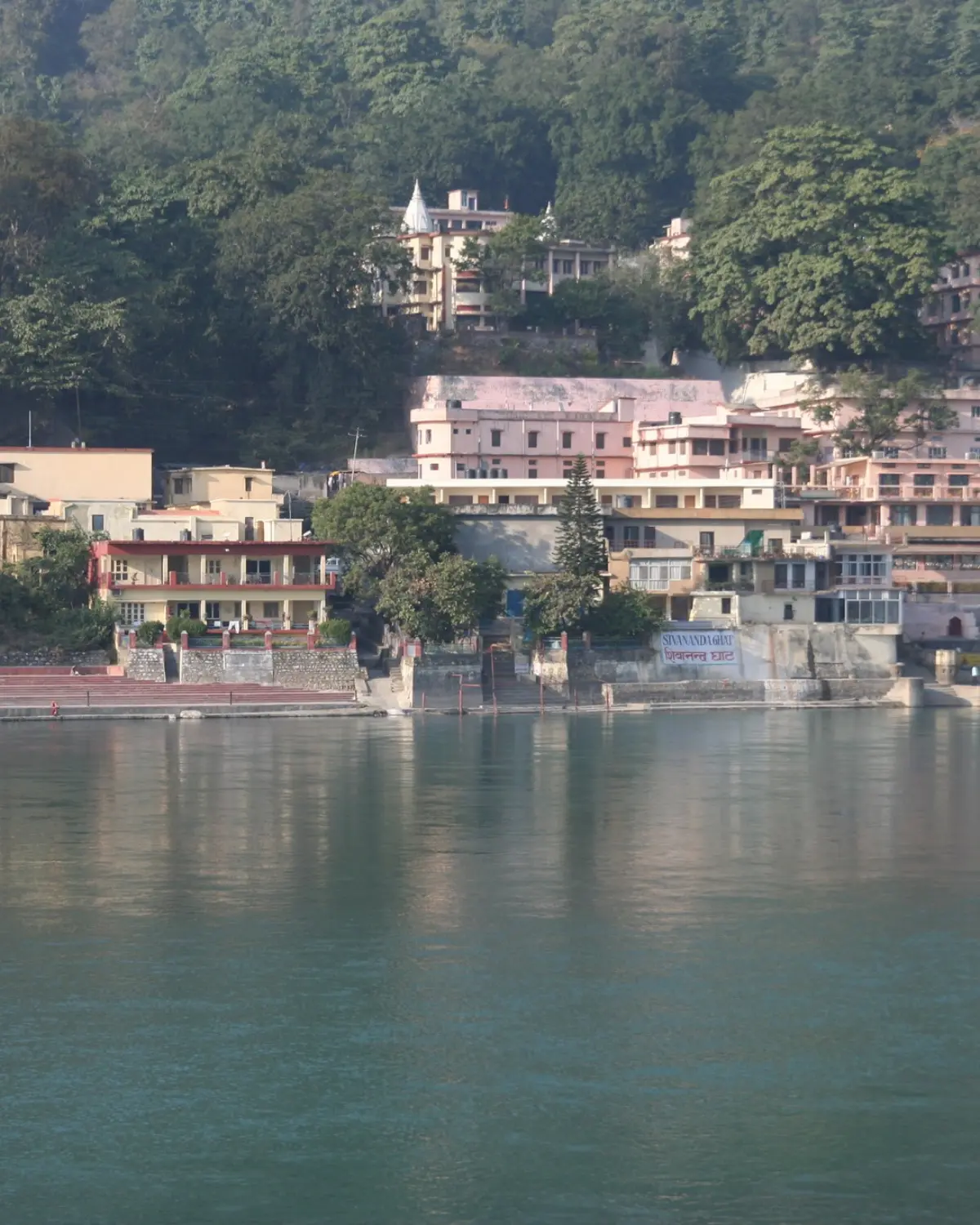
On the west bank of the Ganga at Muni ki Reti, just upstream from Ram Jhula, a cluster of buildings climbs the hillside from Sivananda Ghat. This is where a former doctor from Tamil Nadu settled in the 1930s, wrote more than two hundred books, and sent disciples out to teach yoga in India and abroad. Today "Sivananda yoga" names a class you can take in Montreal, Paris or Kerala. It began here.
Swami Sivananda, the doctor who became a monk
Kuppuswami, the future Swami Sivananda, was born on 8 September 1887 in Pattamadai, in today's Tamil Nadu. He trained in medicine and practised for about ten years in British Malaya, often treating poor patients for free. In 1923 he gave it up and returned to India, and in 1924, in Rishikesh, he was initiated into renunciation by Swami Viśvānanda Sarasvatī. He served the sick, practised austerities and, in the 1930s, settled on the west bank of the river at Muni ki Reti.
- 1936: he founds the Divine Life Society; the ashram becomes its headquarters, with "more than 300 branches around the world" according to its site today.
- 1948: he founds the Yoga-Vedanta Forest Academy.
- He wrote over 200 books on yoga and Vedānta, in a plain English meant for everyone.
- He died at his ashram on 14 July 1963.
He called his teaching the yoga of synthesis: the four classical paths practised together, karma yoga (service), bhakti yoga (devotion), raja yoga (meditation) and jnana yoga (knowledge), with hatha yoga as the base. His motto, often quoted: "Be good, do good, be kind, be compassionate."
His disciples founded several of the institutions that spread yoga in the twentieth century: Swami Chidananda and Swami Krishnananda led the Divine Life Society; Swami Satyananda founded the Bihar School of Yoga; Swami Satchidananda the Integral Yoga Institutes in the United States; Swami Vishnudevananda the Sivananda Yoga Vedanta Centres.
Swami Vishnudevananda and the five points
Born on 31 December 1927 in Kerala, Vishnudevananda entered Sivananda's ashram in 1947, at twenty, and took monastic vows in 1949. In 1957, on his guru's instructions, he left for the West, and founded the first Sivananda Yoga Vedanta Centre in Montreal in 1959. His Complete Illustrated Book of Yoga (1960) was one of the first reference books on postures, and his teacher training course, created in 1969, is often described as the first programme of its kind. He died on 9 November 1993. The organisation, International Sivananda Yoga Vedanta Centres, counts close to 35 ashrams and centres.
He condensed the teaching into five points, the backbone of every Sivananda class:
| Point | Sanskrit | In practice |
|---|---|---|
| Proper exercise | āsana | slow, held postures |
| Proper breathing | prāṇāyāma | kapālabhāti, alternate nostril breathing |
| Proper relaxation | śavāsana | between postures and at the end |
| Proper diet | vegetarian | fresh, simple, sattvic food |
| Positive thinking and meditation | vedānta, dhyāna | study and daily sitting |
A sobering fact belongs here. In December 2019, years after his death, Vishnudevananda's long-time assistant Julie Salter published an account of sexual abuse by him; other women followed. The organisation apologised for not having believed her complaint of 2007. In November 2020, two investigators commissioned by Project SATYA, a support group of former members, concluded that the four allegations of sexual abuse against him that they had investigated were "credible"; this is an investigation report, not a court ruling (sources gathered in Wikipedia's article on him). The ashram in Rishikesh and the Divine Life Society are a separate organisation.
The twelve basic postures
According to the Sivananda centres, these twelve postures "form the foundation of the Sivananda Open Class":
- Headstand (śīrṣāsana), see the headstand
- Shoulderstand (sarvāṅgāsana), see the shoulderstand
- Plough (halāsana), see the plow pose
- Fish (matsyāsana), see the fish pose
- Seated forward bend (paścimottānāsana), see the seated forward bend
- Cobra (bhujaṅgāsana), see the cobra
- Locust (śalabhāsana), see the locust pose
- Bow (dhanurāsana), see the bow
- Half spinal twist (ardha matsyendrāsana), see the seated twist
- Crow (kākāsana), see the crow
- Standing forward bend (pāda hastāsana)
- Triangle (trikoṇāsana), see the triangle
The logic is classical: inversions first, then their counterposes, forward and backward bends, a twist, a balance, and a standing posture to finish.
What a class looks like
A typical open class lasts 90 minutes to two hours:
- Opening: a few minutes of rest in śavāsana, often a chant.
- Breathing: kapālabhāti and anuloma viloma, the centres' name for alternate nostril breathing (see nadi shodhana).
- Sun salutations: six to eight rounds of Surya Namaskar.
- Leg raises, then the twelve postures in order, with a short śavāsana between them.
- Final relaxation: a long guided rest, part by part.
The pace is slow; postures are held; nothing is jumped. In Rishikesh itself, the Divine Life Society's published day runs from meditation at 5 am to an evening satsang of talks, kirtan and bhajans, with the Ganga arati at dusk.
Who it suits
Sivananda yoga suits beginners, people who like a stable structure, and those drawn to the spiritual side of yoga: chanting, vegetarian life, Vedānta, satsang. The intensity is low to moderate, with one real demand: inversions. On the levels of practice, it is a beginner's path that grows with you.
Before you start
Finding an authentic class
Two separate bodies carry the name. The Divine Life Society publishes its ashram's programme and its branches on its official site; the International Sivananda Yoga Vedanta Centres publish their own ashrams, centres and affiliated centres on theirs. Check that a "Sivananda" studio is listed by one of them, and ask where its teachers trained. A teacher training certificate from either body says who trained you, not that a government has recognised it. For the place itself, read our page on the ashrams of Rishikesh.
Other lineages from the same root: the Bihar School of Yoga and yoga nidra. All the schools and paths: the paths of yoga.
Questions people ask
What are the 12 basic postures of Sivananda yoga?
Headstand, shoulderstand, plough, fish, seated forward bend, cobra, locust, bow, half spinal twist, crow, standing forward bend and triangle, in that order, after relaxation, breathing and sun salutations.
What are the five points of yoga?
Swami Vishnudevananda's summary: proper exercise (āsana), proper breathing (prāṇāyāma), proper relaxation (śavāsana), proper diet (vegetarian) and positive thinking and meditation (vedānta and dhyāna).
Is the Sivananda Ashram in Rishikesh the same as the Sivananda centres?
No. The Sivananda Ashram in Rishikesh is the headquarters of the Divine Life Society, founded by Swami Sivananda. The International Sivananda Yoga Vedanta Centres were founded by his disciple Swami Vishnudevananda, starting in Montreal in 1959. They share a founder's name, not an organisation.
Is Sivananda yoga good for beginners?
Yes. The class has a fixed, gentle structure, the twelve postures have simple variations, and rest comes between postures. Headstand is taught progressively; you are never obliged to do it.
Sources
- Introduction to the Sivananda Ashram, The Divine Life Society (official site) checked October 16, 2026
- Ashram Activities, daily programme, The Divine Life Society (official site) checked October 16, 2026
- About, International Sivananda Yoga Vedanta Centres (official site: Vishnudevananda to the West in 1957, Montreal 1959) checked October 16, 2026
- The 5 Points of Yoga, International Sivananda Yoga Vedanta Centres (official site) checked October 16, 2026
- The 12 Basic Asanas, International Sivananda Yoga Vedanta Centres (official site) checked October 16, 2026
- Sivananda Saraswati, Wikipedia (1887-1963, Malaya, Rishikesh 1924, Divine Life Society 1936) checked October 16, 2026
- Swami Vishnudevananda, Wikipedia (1927-1993, teacher training 1969, Project SATYA findings 2020) checked October 16, 2026