अय्यंगार योगiyengar yoga · the method of B.K.S. Iyengar
Iyengar yoga, precision as a path
5 min read · Updated October 16, 2026 · sources checked October 16, 2026
In short
Iyengar yoga is the method of B.K.S. Iyengar (1918-2014), a student of T. Krishnamacharya who taught in Pune from 1937. It is known for precise alignment, postures held for a relatively long time, careful sequencing and props such as belts, blocks, blankets and ropes. Its reference book is Light on Yoga (1966), which describes more than 200 postures.
In 1934 a sickly fifteen-year-old boy arrived in Mysore to live with his brother-in-law, T. Krishnamacharya, who set him to practise postures to restore his health. Eighty years later, B.K.S. Iyengar had become one of the people who most shaped how the world practises yoga. His method is recognisable at a glance: a wooden chair, a belt around the feet, a teacher pointing at the inner edge of a knee, and a pose held long enough to become quiet.
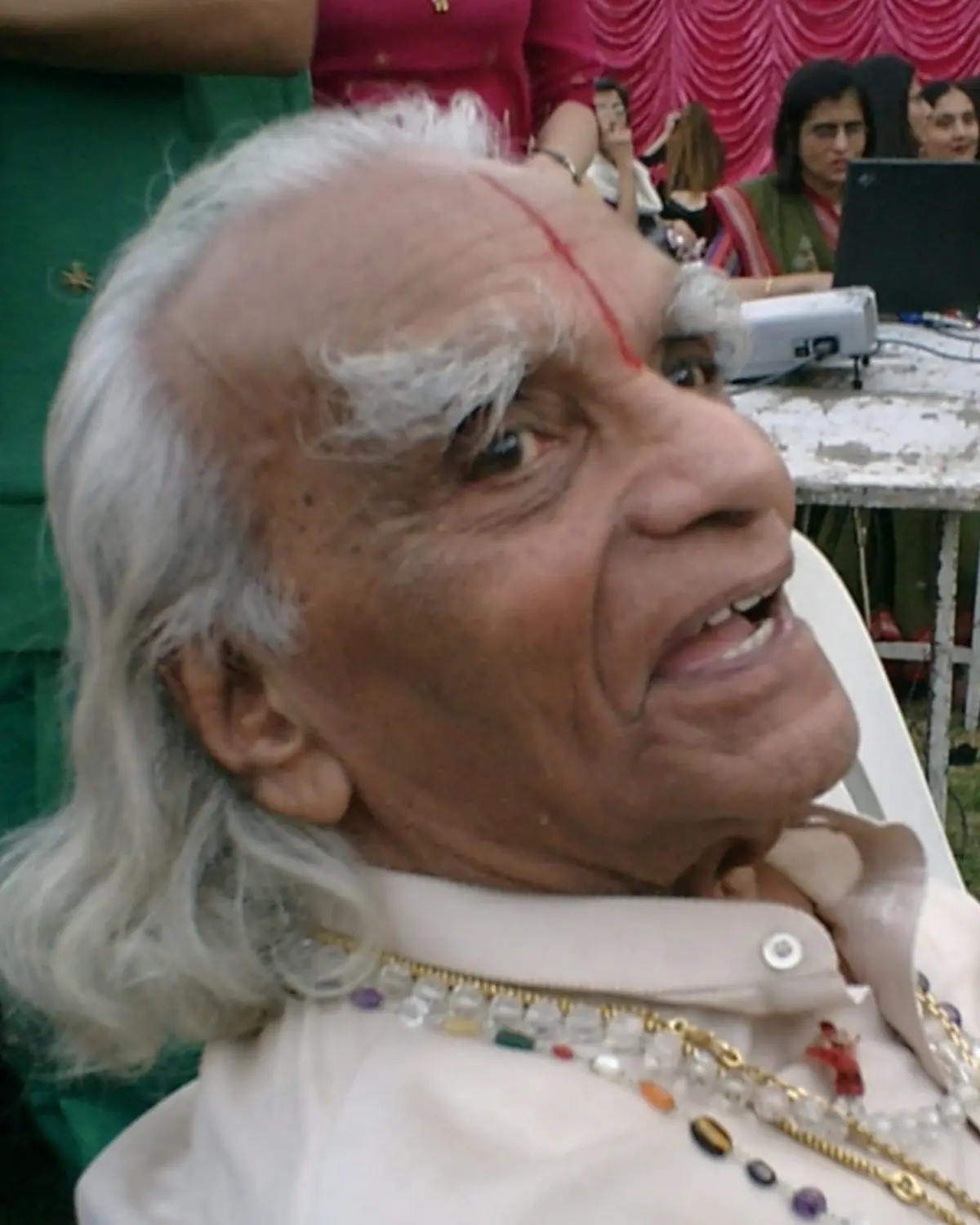
B.K.S. Iyengar: from Bellur to Pune
Bellur Krishnamachar Sundararaja Iyengar was born on 14 December 1918 in Bellur, in the Kolar district of the old Kingdom of Mysore, into a poor family. Invited by Krishnamacharya in 1934, he practised in the Mysore yogashala; he later said that Krishnamacharya "only taught me for about ten or fifteen days, but those few days determined what I have become today". Much of his art grew from his own daily practice. In 1937, at eighteen, Krishnamacharya sent him to Pune to teach. He stayed there for the rest of his life.
- 1952: he meets the violinist Yehudi Menuhin, who invites him to Switzerland in 1954; regular teaching in Europe follows.
- 1966: Light on Yoga is published in London by George Allen and Unwin.
- 19 January 1975: the Ramamani Iyengar Memorial Yoga Institute (RIMYI) opens in Pune, named after his wife, who died in 1973.
- 1981 Light on Prāṇāyāma, 1996 Light on the Yoga Sūtras of Patañjali.
- Honours: Padma Shri (1991), Padma Bhushan (2002), Padma Vibhushan (2014); Time listed him among the 100 most influential people in 2004.
- He died in Pune on 20 August 2014, aged 95. His daughter Geeta (1944-2018), his son Prashant, who has directed the institute since her death, and his granddaughter Abhijata carry the teaching on at RIMYI. In his native Bellur, he had built a temple dedicated to Patañjali.
Light on Yoga, the reference text
Light on Yoga is the book of the method. It opens with an introduction that places postures within the eight limbs of yoga, then describes more than 200 postures with about 600 photographs of Iyengar himself, followed by prāṇāyāma, bandhas and kriyās. An appendix sets out a progressive course over as many as 300 weeks. Its foreword is by Yehudi Menuhin. The scholar Mark Singleton called it "the most influential do-it-yourself yoga book of all time". Its health claims, posture by posture, are those of its author, not of studies; read them as experience, not evidence.
Many postures that are now everywhere were fixed in their modern form by this book, such as Warrior I and the triangle. Iyengar always linked them to Patañjali's definition of posture:
स्थिरसुखमासनम्
sthira-sukham āsanam
Posture is steady and at ease.
What makes the method recognisable
- Precision: each posture is taught in detail, foot by foot, joint by joint; the teacher explains and corrects rather than letting the class imitate.
- Timing: postures are held for a relatively long time compared with other schools, so that effort can settle and attention can go inside.
- Sequencing: the order of postures is chosen for its effect; a week may move from standing poses to forward bends, backbends or inversions.
- Props: the official site lists "wooden gadgets, belts, ropes". Add blocks, bolsters, blankets, chairs, wall ropes. They allow stiff, older, tired or injured students to practise a wider range of postures without strain.
- Standing postures first: beginners learn the triangle, the warriors and mountain pose before inversions or deep backbends.
What a class looks like
A general class usually lasts between an hour and an hour and a half. It may open with a short invocation to Patañjali, then move through a few standing postures held for several breaths, repeated on both sides with new instructions each time. The teacher demonstrates, stops the class to show a detail on one student, and asks everyone to try again. Then come a forward bend or a twist, an inversion with blankets (shoulderstand with the shoulders on folded blankets, headstand only once the teacher judges it safe), and a supported śavāsana at the end. There is no music, little flow, and a great deal of attention.
Who it suits
Iyengar yoga suits people who want to understand their body, those who are stiff or recovering, older beginners, and practitioners from fast styles who want to refine. It suits less well someone looking for a continuous, sweaty flow. Intensity can be high: holding standing poses for a minute is hard work. On the levels of practice, it accepts true beginners and keeps advanced students busy for decades. Its supported, quieter offshoot is restorative yoga.
Before you start
- Wear clothes that let the teacher see your knees and feet.
- Do not bring your own ideas of "the full pose": the prop is part of the posture, not a crutch.
- Expect to be corrected; it is the method, not a judgment.
Finding an authentic teacher
The name Iyengar is protected in many countries and used by certified teachers only. National Iyengar associations publish searchable lists of certified teachers (CIYT) and their level; check the name there before you sign up. Certification takes years: in the United Kingdom, for example, candidates must now attend classes for three years and then be mentored for at least three more before assessment. A studio that sells "Iyengar-style" classes without a certified teacher is not teaching the method. Going to Pune comes later: RIMYI asks foreign students for at least eight years of practice and an application endorsed by their teacher (see our page on Pune).
The other heirs of Krishnamacharya are ashtanga vinyasa yoga and viniyoga. All the schools and paths: the paths of yoga.
Questions people ask
Is Iyengar yoga good for beginners?
Yes. Beginners start with standing postures, learn each one in detail, and use props so that the pose fits their body. Classes are slow and instructed, which suits people who want to understand what they are doing.
Why does Iyengar yoga use so many props?
B.K.S. Iyengar designed belts, blocks, ropes and wooden supports so that students who are stiff, older, tired or injured can reach the shape and the action of a posture without strain, and hold it long enough to learn from it.
Can anyone call their class Iyengar yoga?
No. The name is protected in many countries and reserved for teachers certified through the Iyengar associations, after years of classes and mentoring. National associations publish their list of certified teachers.
Can I study at the Iyengar institute in Pune?
RIMYI admits foreign students who have practised Iyengar yoga for at least eight years, with an application endorsed by their teacher; classes are generally booked a year or two in advance, according to its registration page.
Sources
- Iyengar Yoga, official site of B.K.S. Iyengar and RIMYI (props: wooden gadgets, belts, ropes) checked October 16, 2026
- RIMYI, Ramamani Iyengar Memorial Yoga Institute, established 19 January 1975 (official site) checked October 16, 2026
- Registration at RIMYI, Ramamani Iyengar Memorial Yoga Institute (official site) checked October 16, 2026
- B. K. S. Iyengar, Wikipedia (Bellur 1918, Pune 1937, Menuhin, Padma awards, death 2014) checked October 16, 2026
- Light on Yoga, Wikipedia (Allen and Unwin 1966, more than 200 asanas, about 600 photographs) checked October 16, 2026
- Iyengar Yoga, Wikipedia (precision, sequencing, timing, props, standing poses first) checked October 16, 2026