यात्राyātrā · journey, pilgrimage
Morocco for yogis, between the Atlantic, the Atlas and the desert
Updated October 21, 2026 · sources checked October 21, 2026 · Editorial: The Yogide team
In short
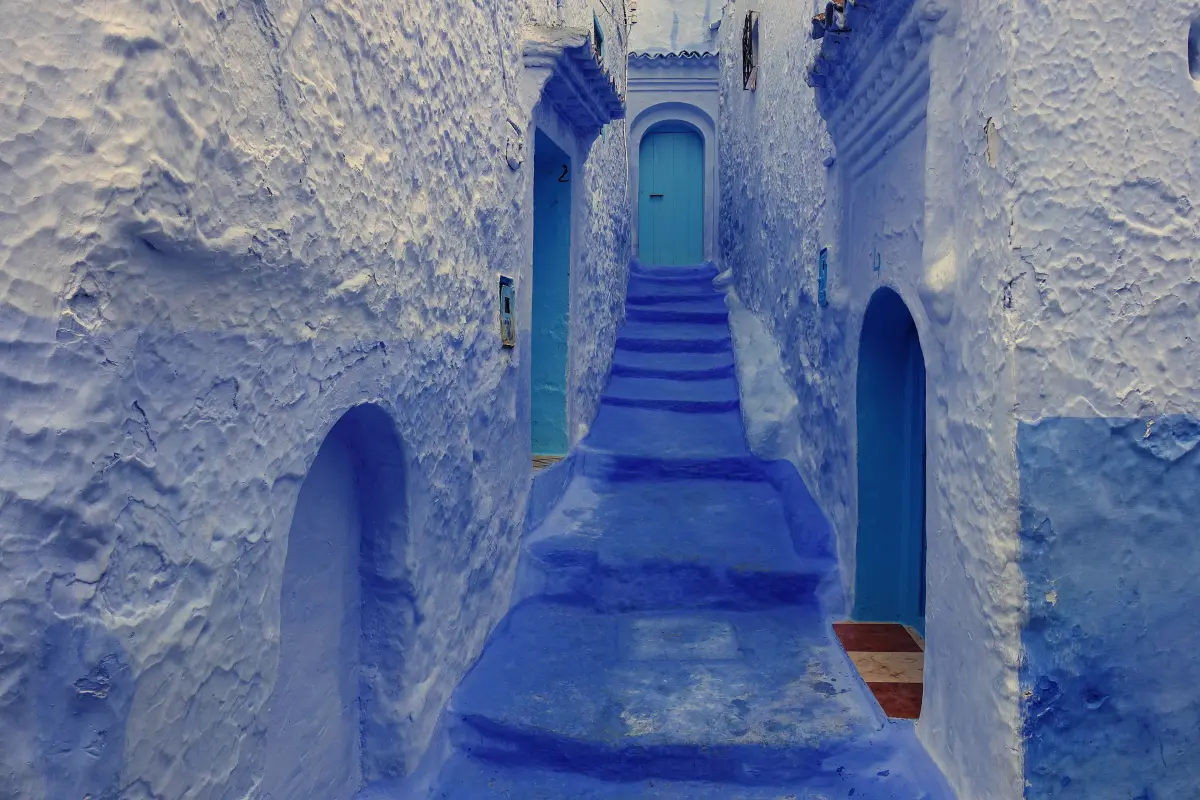
Morocco has no yoga lineage of its own, but it has a deep Sufi heritage, from the zawiyas of Fes to the Gnawa brotherhoods inscribed by UNESCO in 2019, and the silence of the Atlas and the desert. Most retreats are on the Atlantic coast and near Marrakech. British visitors stay 90 days without a visa; Ramadan 2027 is expected to begin around 8 February.
Why come here for yoga
Morocco is not a land of yoga, and it does not pretend to be. It is a Muslim kingdom with its own deep contemplative tradition, Sufism, the inner path of Islam. Its brotherhoods gather in a zawiya, a lodge often built around the tomb of a saint, and practise dhikr, the repeated remembrance of God, sometimes with set postures and breathing. A yogi will recognise kinship in the discipline of repetition and breath, but it is not yoga, and it is not a show. The Gnawa, a Sufi brotherhood music with all-night rhythm and trance ceremonies rooted in the history of slavery, entered UNESCO's list of intangible heritage in 2019.
We found no institution of Indian yoga in Morocco whose programme we could verify; the Sivananda Yoga Vedanta organisation lists no centre there. The many retreats on the Atlantic coast and around Marrakech are modern and international. What Morocco offers a practitioner is the silence of the Atlas and the desert, the long Atlantic light, and the chance to watch a society organise its days around prayer.
Sacred places
- Fes. Its medina has been a UNESCO World Heritage site since 1981. The al-Qarawiyyin, founded as a mosque by Fatima al-Fihri around 857–859, is cited by UNESCO as the oldest continuously operating university in the world. The Sufi master Ahmad al-Tijani, founder of the Tijaniyya order, died in Fes in 1815. The Fes Festival of World Sacred Music, first held in 1994, usually takes place in early June.
- Moulay Idriss Zerhoun. A town on two hills near the Roman ruins of Volubilis, around the tomb of Idris I, founder of the Idrisid dynasty.
- Marrakech. The medina (UNESCO, 1985), the Koutoubia mosque, founded in 1147, with its 77-metre minaret, and the Seven Saints, whose tombs have been the object of a seven-day pilgrimage since the late 17th century.
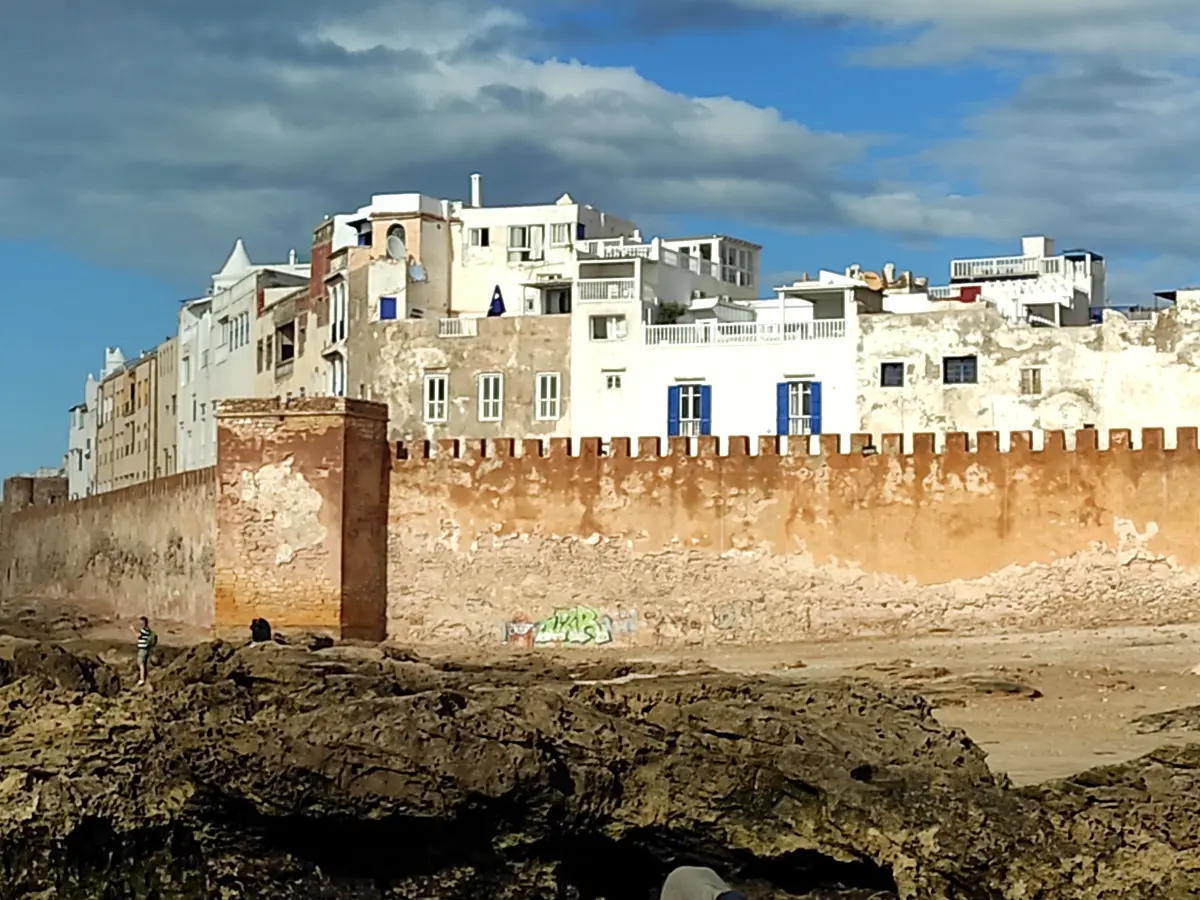
- Essaouira. A medina inscribed by UNESCO in 2001, home of the Gnaoua World Music Festival since 1998.
- Casablanca, Hassan II Mosque. Its foundation offers paid guided visits of the prayer hall, the minaret hall and the ablutions hall, open to non-Muslim visitors.
When to go
Marrakech has a hot semi-arid climate: averages from about 12 °C in winter to 26–30 °C in summer, and only about 281 mm of rain a year (1961–1990). The coast is milder: Agadir's days stay in the 20s °C most of the year, with winter highs around 21 °C, but the Saharan chergui wind can push it above 40 °C for a few days. Essaouira is mild all year (Wikipedia). The Atlas is cold in winter; heavy rain can cause flash floods in the mountains (FCDO).
Ramadan 2027 is expected to begin around 8 February, according to astronomical calculations reported by the press, with Eid al-Fitr around 9 or 10 March; Morocco confirms the dates after the moon sighting. During the month, eating, drinking or smoking in public in daytime may offend, opening hours change, and alcohol cannot be bought (FCDO, France Diplomatie). Spring and autumn are the gentlest seasons.
Getting there
- By air: Marrakech Menara, Agadir Al Massira (for Taghazout, 19 km north of Agadir) and Essaouira Mogador.
- Entry: British citizens need no visa for up to 90 days for tourism; the passport must be valid 3 months after arrival, undamaged, and stamped on entry (FCDO). French citizens need a passport; the identity card is no longer accepted (France Diplomatie). Indian nationals have been able to use the e-Visa since 10 January 2023, on the official platform acces-maroc.ma: processing 24 to 72 hours, stay of 30 days (Moroccan embassy in India). Other nationalities: check with the Moroccan consulate.
- Money: the dirham is not convertible outside Morocco; declare foreign currency worth 100,000 dirhams or more (FCDO).
- Drones: bringing one without authorisation leads to confiscation and a fine (France Diplomatie).
Budget
We publish only prices we could read on an official page. A guided visit of the Hassan II Mosque costs 140 dirhams for a foreign adult (70 for residents, 30 for children over 4 and Moroccan students, free under 4), with tours from Saturday to Thursday at 8, 9, 10 and 11 am and 2 pm, and on Friday at 8, 9, 10 am and 2 pm (Fondation de la Mosquée Hassan II, read 21 October 2026). Indian nationals pay the e-Visa fee shown on acces-maroc.ma. Retreats are not priced in a form we can date: ask for a written quote. France Diplomatie warns of fake agencies in Marrakech offering "VIP" travel contracts: never give your card details.
Etiquette
- Mosques: France Diplomatie states that non-Muslims are formally forbidden to enter Muslim places of worship, apart from major tourist sites. Do not try to look in or photograph worshippers.
- Dress: loose clothing covering arms, legs and chest is advised, especially for women (FCDO); at the beach France Diplomatie suggests a one-piece swimsuit.
- During Ramadan, do not eat, drink or smoke in public in daytime; be patient.
- Law: trying to convert a Muslim is a crime, public criticism of Islam is punished, sex outside marriage and same-sex relations are illegal for Moroccans and can be prosecuted; alcohol only in licensed places; zero tolerance for drugs (FCDO, France Diplomatie).
- Photographs: always ask before photographing people, especially children; never near military sites.
- Guides: in a medina, use only guides with an official badge (FCDO).
Health and safety
Read the FCDO (updated 19 August 2026) and France Diplomatie. The FCDO lists ambulance and fire 150, police 190, gendarmerie 177; France Diplomatie lists police 19, gendarmerie 177, fire brigade 15, and 141 for medical emergencies in Marrakech. Terrorism is a risk, and women alone often face harassment. Stray dog packs can attack: France Diplomatie strongly advises against running or walking alone on wasteland or remote ground, which matters if you practise outdoors at dawn. Most beaches are unsupervised and drownings are frequent. The CDC recommends hepatitis A and typhoid vaccines for unvaccinated travellers; rabies is present. Public hospitals offer limited care; take insurance that covers private clinics and repatriation. The 8 September 2023 Al Haouz earthquake killed almost 3,000 people in the High Atlas, south-west of Marrakech: know what to do in an earthquake.
Choosing a retreat or a training here
Ask, in writing:
- Who teaches, trained where, in which lineage? Is the programme yoga with surfing, hiking or a desert camp, and who leads each part?
- Is a 200-hour training registered with Yoga Alliance, and what does that check? Read our guide to the 200-hour teacher training.
- For desert, quad, balloon or mountain activities: is the operator licensed and insured? The FCDO advises a professional guide in the Atlas and licensed operators for balloons.
- Does the programme respect local customs, including during Ramadan?
Red flags: "Sufi yoga" or Gnawa rituals sold as a show, medical promises, unlicensed transport, pressure to pay in cash. For the source, go to Rishikesh; compare with Spain and Portugal on our yoga travel page.
Questions people ask
Do I need a visa for a yoga retreat in Morocco?
British citizens can visit without a visa for up to 90 days for tourism; the passport must be valid 3 months after arrival and must be stamped on entry (UK FCDO, read 21 October 2026). French citizens need a passport: the identity card is no longer accepted. Indian nationals apply for an e-Visa on acces-maroc.ma, valid 30 days, according to the Moroccan embassy in New Delhi.
When is Ramadan 2027 in Morocco?
Astronomical calculations reported in the press place the start of Ramadan 2027 around 8 February and Eid al-Fitr around 9 or 10 March, but the exact dates depend on the sighting of the new moon and are announced in Morocco shortly before. The UK government only says it starts in February 2027.
Can non-Muslims visit mosques in Morocco?
France Diplomatie states that non-Muslims are formally forbidden to enter Muslim places of worship, except major tourist sites. The Hassan II Mosque in Casablanca offers paid guided visits: 140 dirhams for foreign adults, shoulders, torso and knees covered (Fondation de la Mosquée Hassan II, read 21 October 2026).
Is it safe to go on a yoga retreat in Morocco?
The UK and French governments advise vigilance: terrorism cannot be ruled out, petty crime is common in medinas, women may face harassment, and road accidents are frequent. Stray dog packs can be aggressive, so avoid running alone on wasteland or remote beaches. The 2023 Al Haouz earthquake killed almost 3,000 people.
Want to go and practise yoga there?
Tell us where, when and how you practise. Every request is read by a person and answered by email. No automated email, no commission, no promise of a price or a partner.
Sources
- Morocco travel advice — UK Foreign, Commonwealth & Development Office (updated 19 August 2026) checked October 21, 2026
- Maroc, conseils aux voyageurs, sécurité — France Diplomatie (updated 15 September 2026) checked October 21, 2026
- Maroc, informations utiles (places of worship, customs, laws) — France Diplomatie checked October 21, 2026
- E-Visa — Embassy of the Kingdom of Morocco in India (Indian nationals since 10 January 2023) checked October 21, 2026
- Visite de la mosquée Hassan II — Fondation de la Mosquée Hassan II de Casablanca (times, prices, dress rules) checked October 21, 2026
- Gnawa — UNESCO Representative List of the Intangible Cultural Heritage of Humanity (inscribed 2019) checked October 21, 2026
- When is Ramadan 2027? Potential dates announced for the UAE — The National, 9 September 2026, updated 6 October 2026 (astronomical projection: start around 8 February 2027) checked October 21, 2026
- Travelers' Health: Morocco — US Centers for Disease Control and Prevention checked October 21, 2026
- Marrakesh — Wikipedia (climate, medina inscribed by UNESCO in 1985) checked October 21, 2026
- Fes el Bali — Wikipedia (Medina of Fez, UNESCO 1981; al-Qarawiyyin) checked October 21, 2026
- Fes Festival of World Sacred Music — Wikipedia (first held 1994) checked October 21, 2026
- Taghazout — Wikipedia (fishing village 19 km north of Agadir) checked October 21, 2026
- Dhikr — Wikipedia (remembrance of God in Sufism) checked October 21, 2026
- Seven Saints of Marrakesh — Wikipedia (ziyara created in the late 17th century) checked October 21, 2026
- Essaouira — Wikipedia (medina inscribed by UNESCO in 2001; climate) checked October 21, 2026
- 2023 Al Haouz earthquake — Wikipedia checked October 21, 2026