Is a yoga mat the same as a Pilates mat?
9 min read · Updated October 29, 2026 · sources checked October 21, 2026 · Editorial: The Yogide team
In short
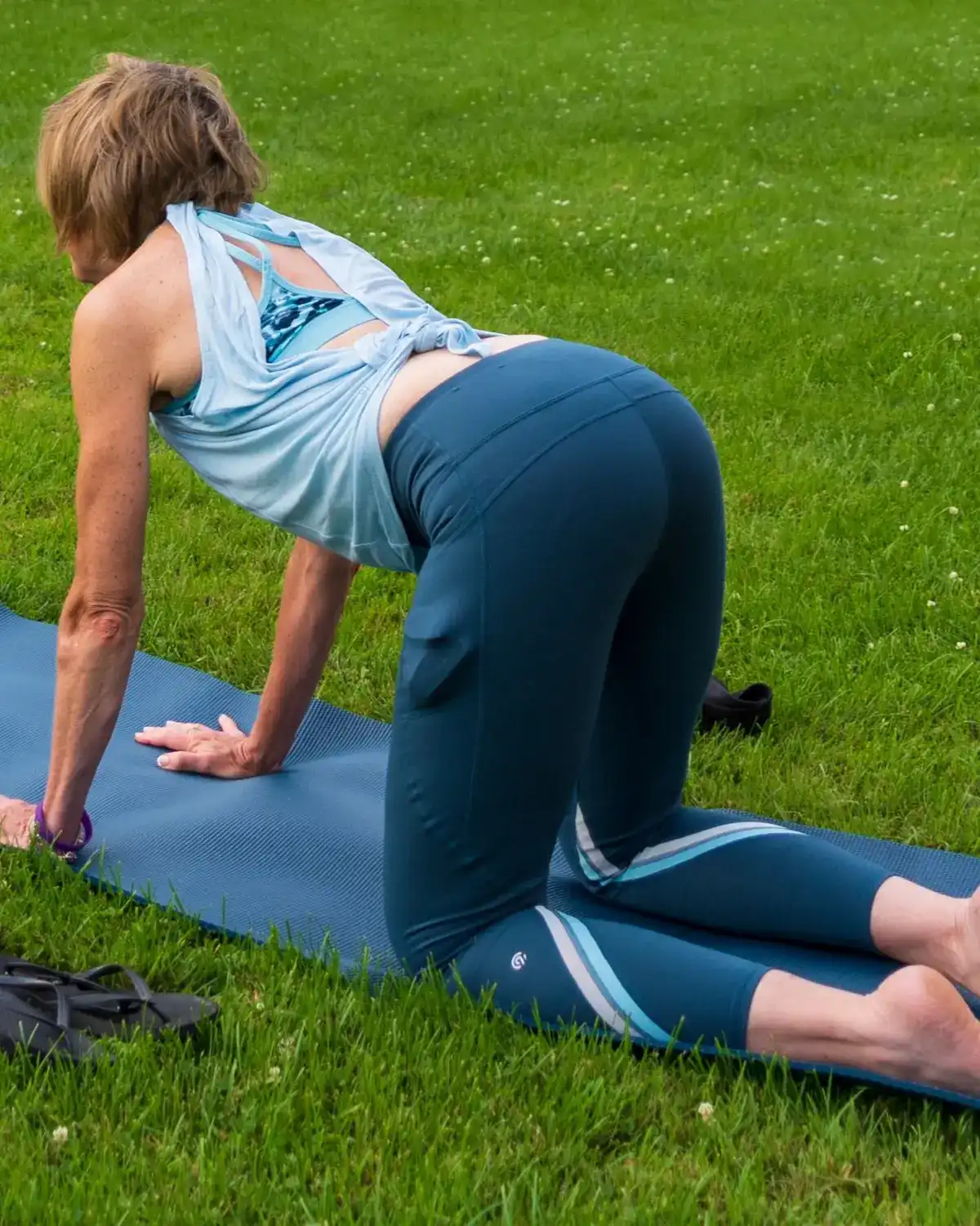
Not quite. Both are rectangles of foam or rubber, but a yoga mat is thin and grippy so that hands and feet stay put in standing poses, while a mat sold for Pilates is thicker and denser to cushion the spine in exercises done lying down and rolling. You can do yoga on a Pilates mat and Pilates on a yoga mat; the trade-off is stability against cushioning.
The short answer
A yoga mat and a Pilates mat are cousins, not twins. Both are a rectangle of foam or rubber that you unroll on the floor. The difference is what each one is asked to do. A yoga mat exists so that your hands and feet do not slide: it is thin, so that you feel the floor under a standing foot, and its surface is made to grip. A mat sold for Pilates exists so that your spine does not hurt: much of mat Pilates is done lying on the back or the side, rolling along the vertebrae and balancing on the sitting bones, so the mat is thicker and denser, and grip matters less.
No standard fixes the thickness of either. The names on the packaging describe an intended use, and plenty of people practise both disciplines happily on one mat. What follows tells you when that works, when it does not, and how to find out with the mat you already own.
Where each mat comes from
The two mats are younger than you might think, and they grew out of two different needs.
The sticky yoga mat was born in 1982, when the teacher Angela Farmer, working in Germany, cut carpet underlay to the size of a towel to stop her hands sliding in class and brought the material back to London. Her father became the first retailer of these "sticky mats", and in the 1990s the first purpose-made yoga mats were manufactured, after the early underlay versions crumbled with use. Before that, yoga was practised on a cotton rug, a folded blanket or the bare floor, and the texts speak of a seat rather than a mat, as we show below. The whole story of what you need underfoot is on choosing a yoga mat.
Pilates began on the floor too. Joseph Pilates developed a minimal-equipment system of mat exercises while interned in Britain as a German national during the First World War, and later named it Contrology, the mind controlling the muscles. He went on to design and patent apparatus, the Reformer among them, but the apparatus was built, in the words of the Wikipedia article read today, to "accelerate the process of stretching, strengthening, body alignment and increased core strength started by the mat work". His two books, Your Health in 1934 and Return to Life Through Contrology in 1945, present the method as the art of controlled movement. Mat work is where it starts, and mat work is done lying down far more often than yoga is. For the two histories side by side, read yoga vs Pilates: two different roots.
What each practice asks of the floor
| Yoga | Mat Pilates | |
|---|---|---|
| Where the body is most of the time | standing, kneeling, seated, lying; many poses held still | lying on the back or side, seated on the sitting bones, some kneeling and plank work |
| What moves | the whole body into a shape, then the breath | controlled repetitions, often the spine curling and uncurling against the floor |
| The mat's first job | grip for hands and feet | cushioning for the spine, hips and tailbone |
| Thickness that suits it | thin to standard; the travel style is about 2 mm, the standard about 3 mm, and up to 6 mm | thicker and denser than a standard yoga mat |
| Surface | textured or tacky, so that a sweaty palm stays in downward-facing dog | smooth is fine; the body slides little |
| What goes wrong on the other mat | a soft mat tilts the foot in balance poses | a thin mat lets the vertebrae knock on the floor |
The figures in the yoga column are the common range described by Wikipedia today, not a norm, and a mat around 180 by 61 cm is the usual size. Pilates mats are sold in a wider spread of thicknesses, and we found no standard that fixes them, so we give none.
Test the mat you already own
Before buying anything, spend a few minutes on your current mat. Three positions tell you almost everything.
- Hands and feet. Come into downward-facing dog and stay for several slow breaths. If your palms creep forward, the mat is too slippery for yoga, or it needs washing. A Pilates mat often fails this test; it was not built for it.
- One foot. Stand on one leg, the other foot resting against the inner calf, as in the tree. If the standing foot sinks and tilts and you wobble more than usual, the mat is too thick and soft for standing yoga. Step onto the bare floor and compare.
- Spine and tailbone. Lie on your back, hug the knees and rock gently a short way along the spine, then sit up and balance on the sitting bones with the knees bent. If a vertebra or the tailbone presses painfully into the floor, the mat is too thin for mat Pilates as it stands.
A mat that passes all three serves both. A mat that passes two can be fixed with a folded blanket, which is what Indian practitioners have always used anyway, as the page on props explains.
Can I use a yoga mat for Pilates?
Yes. The grip you do not need does no harm, and a yoga mat is long enough for every lying exercise. The only thing it may lack is padding. In the rolling and balancing exercises, the sitting bones, the tailbone and the back of the pelvis bear the weight, and on a thin mat that can bruise. Two solutions, in this order: fold a blanket or towel under the part of the mat where your pelvis lands, or fold the yoga mat itself in two for those exercises. Buy a thicker mat only if you take up mat Pilates several times a week and the blanket does not settle it.
Can you do yoga on a Pilates mat?
Yes, with one adjustment. A thick, soft Pilates mat is comfortable for the seated, kneeling and lying parts of a yoga session, and kinder to the knees in kneeling poses than a thin mat. Where it fails is standing and balancing: the foot sinks, the ankle works harder, and the tree or the warrior feels unsteady. A simple habit solves it. Do the standing part of your practice on the bare floor or a non-slip rug, then unroll the mat for everything on the floor, including śavāsana at the end, where the extra thickness is a pleasure. If the surface is slippery under a sweaty palm, lay a cotton rug or towel over it.
If you want one mat for both
Choose by the three tests, not by the label. For most people the compromise is a yoga mat at the thicker end of its usual range, in a dense foam or natural rubber rather than a spongy one: dense material cushions the spine without letting the foot sink. Keep a folded blanket beside it for the tailbone and the knees. If you have a latex allergy, check the material, as natural rubber is a source of latex. And if you are beginning yoga rather than Pilates, you need no special mat at all for the twelve basic poses: a clear piece of carpet and a blanket are enough to start.
What the tradition says about the seat
The question is new, because both mats are new, but the criteria are old. When the Bhagavad Gita describes how a yogi prepares to sit, it names exactly what matters today:
शुचौ देशे प्रतिष्ठाप्य स्थिरमासनमात्मनः । नात्युच्छ्रितं नातिनीचं चैलाजिनकुशोत्तरम् ॥
śucau deśe pratiṣṭhāpya sthiram āsanam ātmanaḥ / nātyucchritaṃ nātinīcaṃ cailājinakuśottaram
Having set up in a clean place a steady seat for himself, neither too high nor too low, with cloth, skin and kuśa grass laid one upon the other.
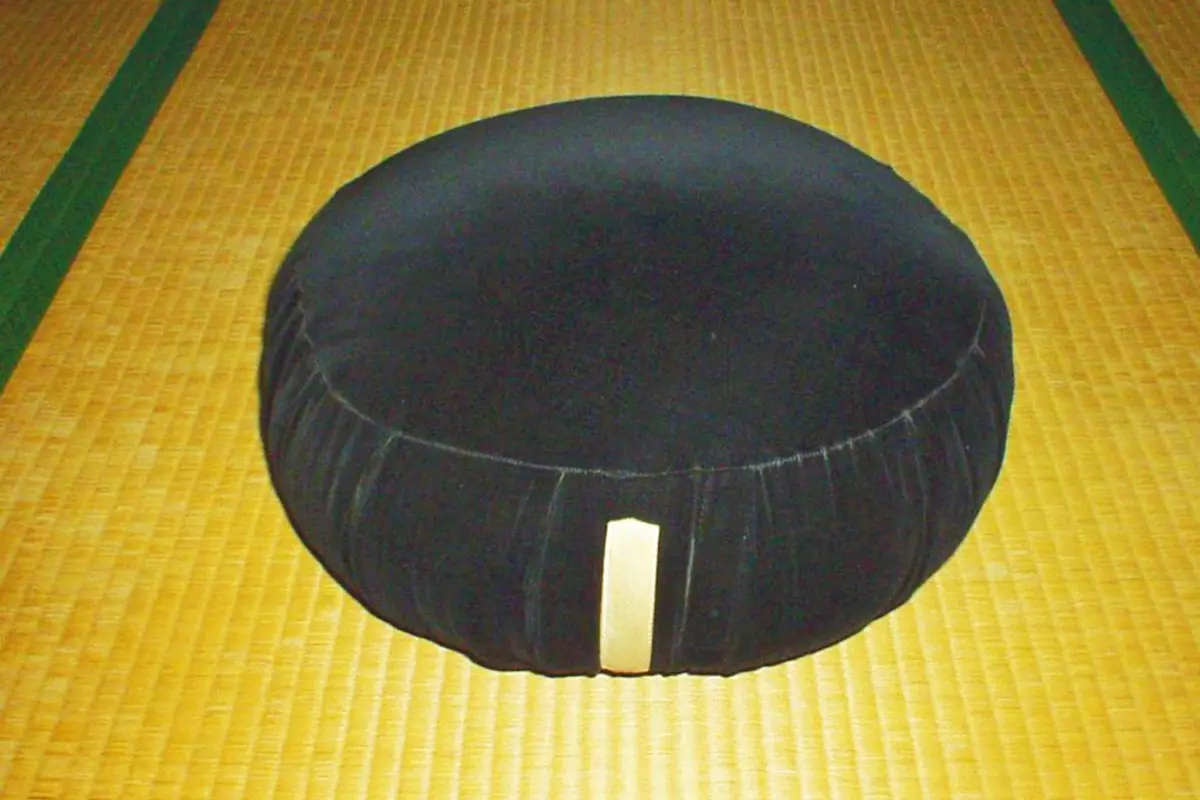
Sthira, steady: a seat that does not slide, which is what grip means. Neither too high nor too low: enough thickness to be comfortable, not so much that you lose your footing. And the layers, grass, skin and cloth, are the ancestor of the blanket folded on top of a mat. Whatever label is on your mat, those three measures are the ones to apply.
The book Begin Yoga at Home — 30 Days goes further on this question than a page can: one chapter sets up your space and kit, with a table of what the mat, the blanket, the blocks and the cushion each do and which household object replaces them, and another adapts every posture to sore knees, wrists and backs, including when to double the mat or slide a blanket under you.
Questions people ask
Can I use a yoga mat for Pilates?
Yes. A yoga mat holds you perfectly well for mat Pilates; its only weakness is thin padding under the spine, the hips and the tailbone when you roll or lie on your back for long. If a vertebra or your tailbone complains, fold a blanket under that part of the mat rather than buying a second one straight away.
Can you do yoga on a Pilates mat?
Yes, with one adjustment. A thick, soft Pilates mat makes standing and balancing postures wobbly, because the foot sinks and tilts. Do the seated, kneeling and lying parts of your practice on it, and step onto the bare floor or a rug for the tree, the warrior and other standing poses if you feel unsteady.
What is the difference between a yoga mat and a Pilates mat?
Thickness, density and grip. A yoga mat is built around grip, so that hands and feet do not slide in postures like downward-facing dog, and it stays thin so that you feel the floor. A Pilates mat is built around cushioning for a spine that rolls and presses into the floor, so it is thicker and denser, and grip matters less. No standard fixes either; the label describes the intended use.
Which yoga mat works for Pilates as well?
A standard yoga mat at the thicker end of the usual range, with a dense rather than spongy foam, serves both practices for most people. Test it by lying on your back and feeling whether the spine presses uncomfortably into the floor, then by standing on one leg and feeling whether the foot stays level. If both are fine, one mat is enough.
Sources
- Yoga mat, Wikipedia (Angela Farmer and carpet underlay in 1982, Hugger Mugger in the 1990s, thickness from 2 mm travel to 3 mm standard and up to 6 mm, size about 180 by 61 cm, materials, grip) checked October 21, 2026
- Pilates, Wikipedia (Contrology, mat work as the start of the method and apparatus built to accelerate it, Your Health 1934, Return to Life Through Contrology 1945, comparison with yoga) checked October 21, 2026
- Joseph Pilates, Wikipedia (minimal-equipment system of mat exercises developed during his First World War internment, later called Contrology; apparatus patented afterwards) checked October 21, 2026
- Bhagavadgītā, critical edition (Bhandarkar Oriental Research Institute), Sanskrit text, 6.11-6.12 (GRETIL, University of Göttingen) checked October 21, 2026