आसनāsana · seat
Choosing a yoga mat: what actually matters
Before brands and colours, a yoga mat has three jobs: not to slip, to protect your knees, and to mark out a clean place for practice.
3 min read · Updated October 17, 2026 · sources checked October 17, 2026
In short
A good yoga mat is one that does not slip under your hands and feet, cushions your knees enough for your practice, and is long enough for your body. For most home practice, a mat of about 4 to 6 mm with good grip is enough; thinner mats suit travel and standing practice, thicker ones gentle floor work.
This page recommends no brand and ranks nothing. We sell no mats and earn nothing from any. What it gives you instead is the handful of criteria that make a real difference on the floor, and the reason the Indian tradition has always cared about what you sit on.
The seat in the texts
Long before rubber, the yogi's mat was a seat. The Bhagavad Gita describes it in the sixth chapter, its manual of meditation:
शुचौ देशे प्रतिष्ठाप्य स्थिरमासनमात्मनः । नात्युच्छ्रितं नातिनीचं चैलाजिनकुशोत्तरम् ॥
śucau deśe pratiṣṭhāpya sthiram āsanam ātmanaḥ / nātyucchritaṃ nātinīcaṃ cailājinakuśottaram
In a clean place, let him set up for himself a steady seat, neither too high nor too low, made of kuśa grass covered with a skin and a cloth.
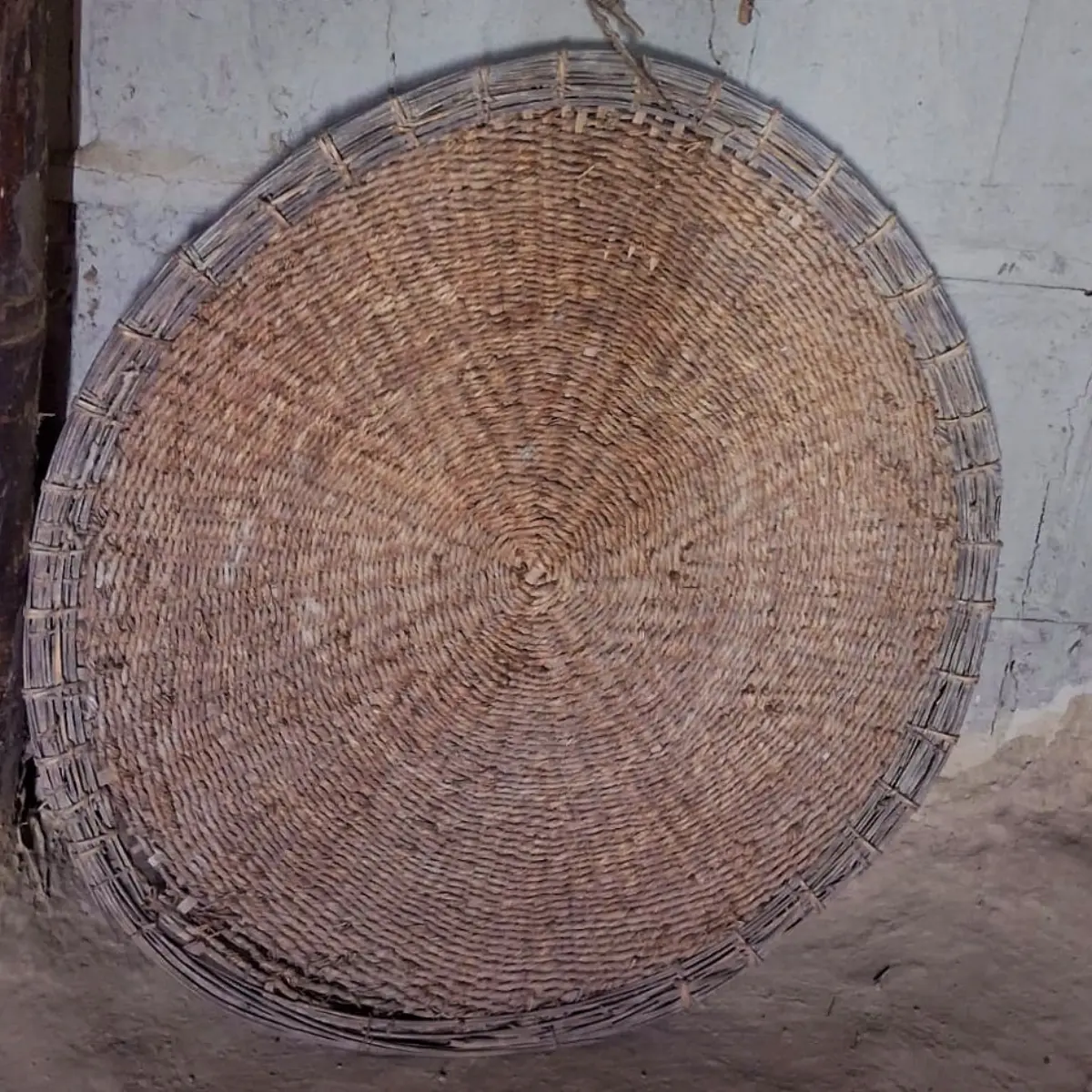
Three words still apply. Śuci, clean: the place and the mat are kept clean. Sthira, steady: the seat must not move, which is exactly what grip means today. Neither too high nor too low: thick enough to sit comfortably, not so thick that you wobble. Kuśa (कुश) is a sacred grass of Vedic ritual; commentators describe the layers as grass at the bottom, then a skin, then cloth on top. Patañjali uses the same word, sthira, for posture itself (Yoga Sutra 2.46).
In Indian homes and ashrams, the everyday version is cotton: a folded blanket or a durrie (dhurrie), the flat-woven cotton rug of India. The Indian government's Common Yoga Protocol, the booklet written for the International Day of Yoga, still lists "a mattress, yoga mat, durrie or folded blanket" as the surface to practise on.
The four criteria that matter
1. Grip
A mat exists first so that your hands and feet do not slide. Test it in downward-facing dog: if your hands creep forward, the mat is too slippery for you, or needs washing. Grip also depends on your skin: sweaty hands slip on smooth surfaces, and a cotton rug on top of a rubber mat is a traditional solution in heat.
2. Thickness
| Thickness | Good for | Less good for |
|---|---|---|
| 1 to 2 mm (travel) | carrying, laying over a carpet or another mat | knees on a hard floor |
| 3 to 6 mm (standard) | most home practice, standing and floor work | very sensitive knees |
| more than 6 mm | gentle floor practice, sensitive joints, seniors | balance postures, which feel unstable |
These ranges are common practice, not a standard. If your knees hurt in kneeling postures, fold the mat in two under them or add a blanket rather than buying a thicker mat for everything.
3. Size
Lie on the mat: your head and heels should both be on it in śavāsana. Common mats measure roughly 170 to 185 cm; if you are tall, look for a longer one. Width matters less, but a wider mat helps if you have broad shoulders.
4. Material
| Material | What to know |
|---|---|
| Natural rubber | good grip and density; heavy; a source of latex, so not for people with a latex allergy |
| PVC | durable, often inexpensive, easy to wipe; a plastic that is hard to recycle |
| TPE (thermoplastic elastomer) | light, latex-free; usually less durable |
| Cork (on a backing) | a dry, textured surface; check what the backing is made of |
| Cotton or jute | the traditional texture; washable cotton rugs absorb sweat; little cushioning, can slide on a smooth floor without a non-slip layer |
Simple rules of use
- Keep it for practice. In India, the seat of practice is not walked on with shoes. A mat that is only used for yoga stays cleaner and becomes a small signal: when it is unrolled, it is time to practise.
- Clean it after practice with a damp cloth and mild soap; let it dry before rolling.
- On a slippery floor, put the mat on a carpet or a non-slip underlay, especially for standing postures.
- For seated meditation, add a firm cushion or a folded blanket under the sitting bones, so that the knees rest lower than the hips.
What you do not need
You do not need a mat to begin. A clear piece of carpet and a folded blanket are enough for the twelve basic poses and for the sessions of yoga at home. Buy a mat when you know you will practise regularly, and choose it by the four criteria above, not by its pattern. If you are deciding what to wear as well, see what to wear for yoga, and for your first steps, start here.
Questions people ask
What thickness of yoga mat should a beginner choose?
Around 4 to 6 mm suits most beginners: enough cushion for the knees, stable enough for standing postures. Very thick mats (8 mm and more) are comfortable lying down but make balance harder.
Can I practise yoga without a mat?
Yes. The Indian government's Common Yoga Protocol lists a mattress, a yoga mat, a durrie or a folded blanket. On a carpet or a non-slip rug, a folded blanket under the knees is enough to begin.
Is a natural rubber mat a problem if I am allergic to latex?
It can be. Natural rubber is the source of latex, and latex can cause allergic reactions. If you have a latex allergy, choose a mat labelled latex-free, such as cotton, cork on a latex-free base, TPE or PVC.
How do I clean a yoga mat?
Wipe it after practice with a damp cloth and a little mild soap, then let it dry flat or hanging, away from direct sun. Follow the maker's instructions: some natural materials do not tolerate soaking.
Sources
- Bhagavadgītā, critical edition (Bhandarkar Oriental Research Institute), Sanskrit text, 6.11 (GRETIL) checked October 17, 2026
- Common Yoga Protocol, Ministry of AYUSH, Government of India, 4th revised edition (May 2019), General guidelines, PDF checked October 17, 2026
- Latex Allergy — MedlinePlus, US National Library of Medicine checked October 17, 2026
- Dhurrie, the flat-woven cotton rug of India — Wikipedia checked October 17, 2026
- Patañjali, Yogasūtra, Sanskrit text, 2.46 (GRETIL, University of Göttingen) checked October 17, 2026