यात्राyātrā · journey, pilgrimage
Costa Rica for yogis, between two oceans
Updated October 21, 2026 · sources checked October 21, 2026 · Editorial: The Yogide team
In short
Costa Rica has no ancient yoga lineage; people come for its retreats and teacher trainings, mostly modern and international, in places such as Nosara on the Nicoya Peninsula. On the Pacific side the dry season runs from December to March. Nationals of the US, UK, Canada, France and the EU may stay up to 180 days without a visa, at the officer's discretion.
Why come here for yoga
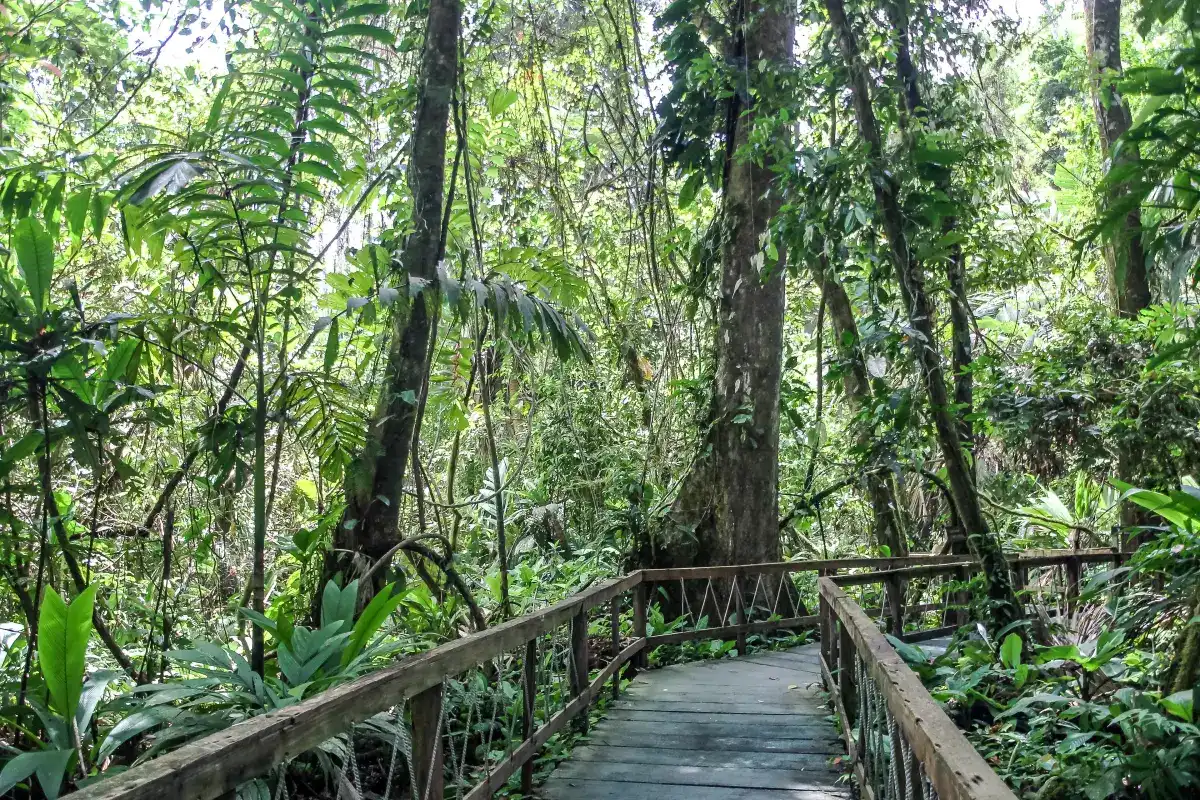
Let us be honest from the start: Costa Rica is not a cradle of yoga, and no Indian lineage was born here. What it has is a reputation, built over three decades, as a place where people go to practise in nature: jungle above the Pacific, early classes before the heat, surf in the afternoon. The retreats and trainings you will find are almost all modern and international, run in English, in styles such as vinyasa, hatha or yin.
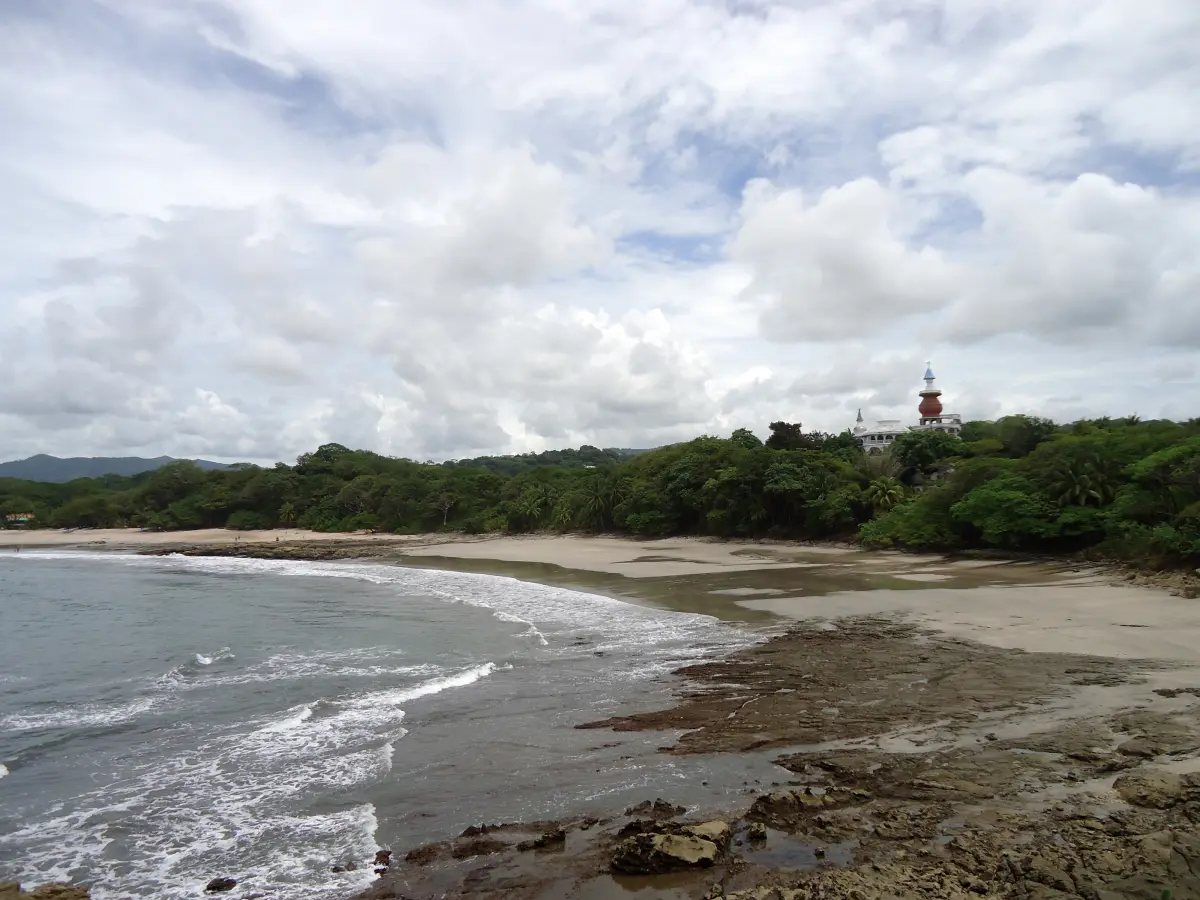
The name you will meet most often is Nosara, a district of the Nicoya canton in Guanacaste, on the Pacific side of the Nicoya Peninsula. According to the local newspaper Voz de Guanacaste (February 2014), a yoga institute founded by Don and Amba Stapleton had offered classes and teacher trainings there since 1994; it later changed hands. On 21 October 2026 its former website did not answer, so we name it only as history: check any school in Nosara directly.
What Costa Rica offers a yogi on its own terms is real, and worth respecting:
- The Nicoya Peninsula's long lives. A demographic study of 16,300 elderly Costa Ricans found that Nicoyan men had a lower death rate than other Costa Rican men (death rate ratio 0.80 for 1990–2011), an advantage driven by lower cardiovascular mortality and not seen in women (Rosero-Bixby et al., 2013). It is a fact about a population, not a promise about a retreat.
- A living Catholic pilgrimage. Catholicism is the state religion under the 1949 Constitution, and every year, from 23 July to 2 August, pilgrims walk to the Basilica of Our Lady of the Angels in Cartago, many from far away, some entering the church on their knees (Wikipedia in Spanish).
- Indigenous traditions. For the Bribri of Talamanca, cacao is sacred: only women prepare the ritual cacao drink. Keep that in mind when a retreat offers a "cacao ceremony".
- Nature as a teacher of patience. On the beach of Ostional, a few kilometres north of Nosara, olive ridley turtles come ashore by the thousands during arribadas, protected by a wildlife refuge first declared in 1982; the largest usually come in September, October and November (The Tico Times, 4 September 2026).
Sacred places
- Basílica de Nuestra Señora de los Ángeles, Cartago: the national shrine. The feast on 2 August is a public holiday. Visit in silence outside Mass, or join the pilgrims' last kilometres with respect.
- Ostional Wildlife Refuge, Guanacaste: during an arribada, the beach is closed to anyone not accompanied by a certified local guide, in groups of at most nine, and flash photography and white torches are prohibited (The Tico Times, September 2026). Do not touch the turtles.
- The stone spheres of the Diquís, in the south: pre-Columbian chiefdom settlements with stone spheres, inscribed as a UNESCO World Heritage Site in June 2014.
- Indigenous territories: there are 24, created under the 1977 Indigenous Law. Visit only with an invitation or a community-run programme.
When to go
Costa Rica has two climates, divided by its mountain spine (IMN, the national meteorological institute):
| Side | Dry | Rainy | Wettest |
|---|---|---|---|
| Pacific (Nosara, Guanacaste) | December to March; April is a transition | May to October, with a lull in July–August; November is a transition | September and October |
| Caribbean (Puerto Viejo, Limón) | No defined dry season; drier spells in February–March and September–October | November to January and May to August | December |
For a Pacific retreat, December to April is the dry, bright season. France Diplomatie notes that from May to the end of November storms, floods and landslides can cut roads, and that dengue rises in the rainy season.
Getting there
- By air: Daniel Oduber Quirós International Airport, 11 km from Liberia in Guanacaste, is the gateway for the Nicoya Peninsula; Juan Santamaría International Airport, 20 km from San José, serves the rest of the country. The UK FCDO notes that services at Liberia have been subject to interruptions.
- Entry: under the directive in force since 17 November 2025, nationals of the first group, which includes the US, Canada, the UK, France, Germany and Australia, may stay up to 180 days without a visa; the officer decides the exact period. The Costa Rica Tourism Board asks for an onward or return ticket and proof of means of at least US$100 a month. Your passport must be valid at least one day beyond your departure (FCDO).
- On the road: roads on the peninsula can be rough in the rainy season. Use official taxis, red or orange with a triangle sticker (FCDO).
Budget
On 21 October 2026, the amounts we could verify are official ones: a departure tax of US$29 when leaving by air, usually included in your ticket, and an overstay fine of US$100 per month (FCDO). National park tickets are sold online on SINAC's SICORE system, with time slots; we did not find a dated official fee list, so check there. We print no price for retreats or trainings: ask for a written quote, with what is included.
Etiquette
- In churches: covered shoulders, silence, no photos during Mass.
- With turtles and wildlife: keep your distance, no lights on nesting beaches, follow the guide.
- With Indigenous culture: no "ceremony" borrowed without the community; ask who leads it and on whose behalf.
- Greet with buenos días; pura vida is the friendly local catchphrase.
Health and safety
France Diplomatie places Costa Rica under heightened vigilance: crime is rising, thefts target tourists on beaches, in buses and in rental cars, and burglaries and serious violence have been reported in isolated accommodation, notably around Tamarindo. The UK FCDO adds that rip currents are very common with often no lifeguards, that crocodiles are seen near some Pacific surf beaches, and that drinks have been spiked in bars.
On health, the US CDC issued a Level 2 notice for chikungunya in north-west Costa Rica (updated 30 July 2026) and a notice for a hepatitis A outbreak (18 September 2026); it recommends malaria prevention only for Alajuela and Limón provinces. France Diplomatie warns against taking anti-inflammatories if dengue is suspected, and formally advises against ayahuasca, which some retreats offer. Volcanoes are active: Rincón de la Vieja was at alert level 3 of 4 in September 2026. Emergency number: 911.
Choosing a retreat or a training here
Ask, in writing, before paying:
- Who teaches, by name, trained where and in which lineage? Read our pages on hatha yoga and the 200-hour teacher training to know what to expect from a syllabus.
- If the certificate claims Yoga Alliance registration, check the school on Yoga Alliance's own site, and read what Yoga Alliance does and does not check.
- What is included: room, meals, transfers, park fees? Cancellation and refund policy?
- Are any substances or "plant medicine" ceremonies part of the programme? If yes, think twice: France Diplomatie advises against them.
- Is the place registered with the Costa Rica Tourism Board (ICT), and are excursions run by licensed guides, as France Diplomatie recommends?
Red flags: medical promises, pressure to pay in cash, refusal to name the teachers. If you want the Indian source of yoga, go to Rishikesh; other destinations, from Bali to Thailand, are on our yoga travel page.
Questions people ask
How long can I stay in Costa Rica without a visa?
Nationals of the countries in Costa Rica's first group, including the United States, Canada, the United Kingdom, France, Germany and Australia, may stay up to 180 days without a visa under the directive in force since 17 November 2025. The immigration officer decides the exact number of days on arrival. You also need an onward or return ticket and may be asked for proof of funds (Costa Rica Tourism Board, read 21 October 2026).
When is the dry season in Nosara and Guanacaste?
On the Pacific side, Costa Rica's national meteorological institute (IMN) describes a dry season from December to March, April as a transition month, and a rainy season from May to October, with September and October the wettest months. The Caribbean coast has no defined dry season; its driest spells are February–March and September–October.
Is there a Nosara Yoga Institute?
A yoga institute has taught in Nosara since 1994, according to the local newspaper Voz de Guanacaste (2014), and it later changed owners. On 21 October 2026 its former website, nosarayoga.com, did not answer, so we cannot tell you what it offers today. Check any school in Nosara directly and in writing.
Is it safe to swim in Costa Rica?
Be careful. The UK government warns that rip currents are very common and there are often no lifeguards, and France Diplomatie says drownings are frequent. Swim only where locals do, never alone, and if caught in a current, swim parallel to the beach rather than against it.
Want to go and practise yoga there?
Tell us where, when and how you practise. Every request is read by a person and answered by email. No automated email, no commission, no promise of a price or a partner.
Sources
- Entry Requirements — Costa Rica Tourism Board (ICT), visitcostarica.com (groups, 180 days, onward ticket, US$100 a month) checked October 21, 2026
- Costa Rica actualiza requisitos de ingreso — El Financiero, 10 December 2025 (directive AJ-484-11-2025, first group) checked October 21, 2026
- Costa Rica travel advice — UK Foreign, Commonwealth & Development Office (updated 19 May 2026) checked October 21, 2026
- Costa Rica: safety and security — UK FCDO checked October 21, 2026
- Costa Rica, conseils aux voyageurs, sécurité — France Diplomatie (updated 15 September 2026) checked October 21, 2026
- Costa Rica, conseils aux voyageurs, santé — France Diplomatie (updated 15 September 2026) checked October 21, 2026
- Costa Rica, Traveler View — US Centers for Disease Control and Prevention (chikungunya notice of 30 July 2026) checked October 21, 2026
- El clima y las regiones climáticas de Costa Rica — Instituto Meteorológico Nacional (IMN) checked October 21, 2026
- Rosero-Bixby L, Dow WH, Rehkopf DH. The Nicoya region of Costa Rica: a high longevity island for elderly males. Vienna Yearbook of Population Research, 2013 DOI 10.1553/populationyearbook2013s109 PMID 25426140 checked October 21, 2026
- SICORE, online reservations for national parks — SINAC checked October 21, 2026
- Nosara Yoga Institute expansion — Voz de Guanacaste, 6 February 2014 checked October 21, 2026
- Virgen de los Ángeles (Costa Rica) — Wikipedia in Spanish (romería, 2 August) checked October 21, 2026
- Ostional Wildlife Refuge — Wikipedia (protected since 1982, Tempisque Conservation Area) checked October 21, 2026
- Ostional arribada one of the largest of 2026 — The Tico Times, 4 September 2026 (guided groups of nine, no flash) checked October 21, 2026
- Costa Rica, dernières minutes et alertes — France Diplomatie (10 September 2026: Rincón de la Vieja at level 3 of 4; emergency 911) checked October 21, 2026
- Religion in Costa Rica — Wikipedia (Catholicism as state religion under the 1949 Constitution) checked October 21, 2026
- Indigenous peoples of Costa Rica — Wikipedia (24 territories, 1977 Indigenous Law, Bribri and cacao) checked October 21, 2026
- Stone spheres of Costa Rica — Wikipedia (Diquís, UNESCO World Heritage, June 2014) checked October 21, 2026