हनुमान चालीसाhanumān cālīsā · the forty verses to Hanumān
The Hanuman Chalisa, text and meaning
12 min read · Updated October 20, 2026 · sources checked October 20, 2026 · Editorial: The Yogide team
In short
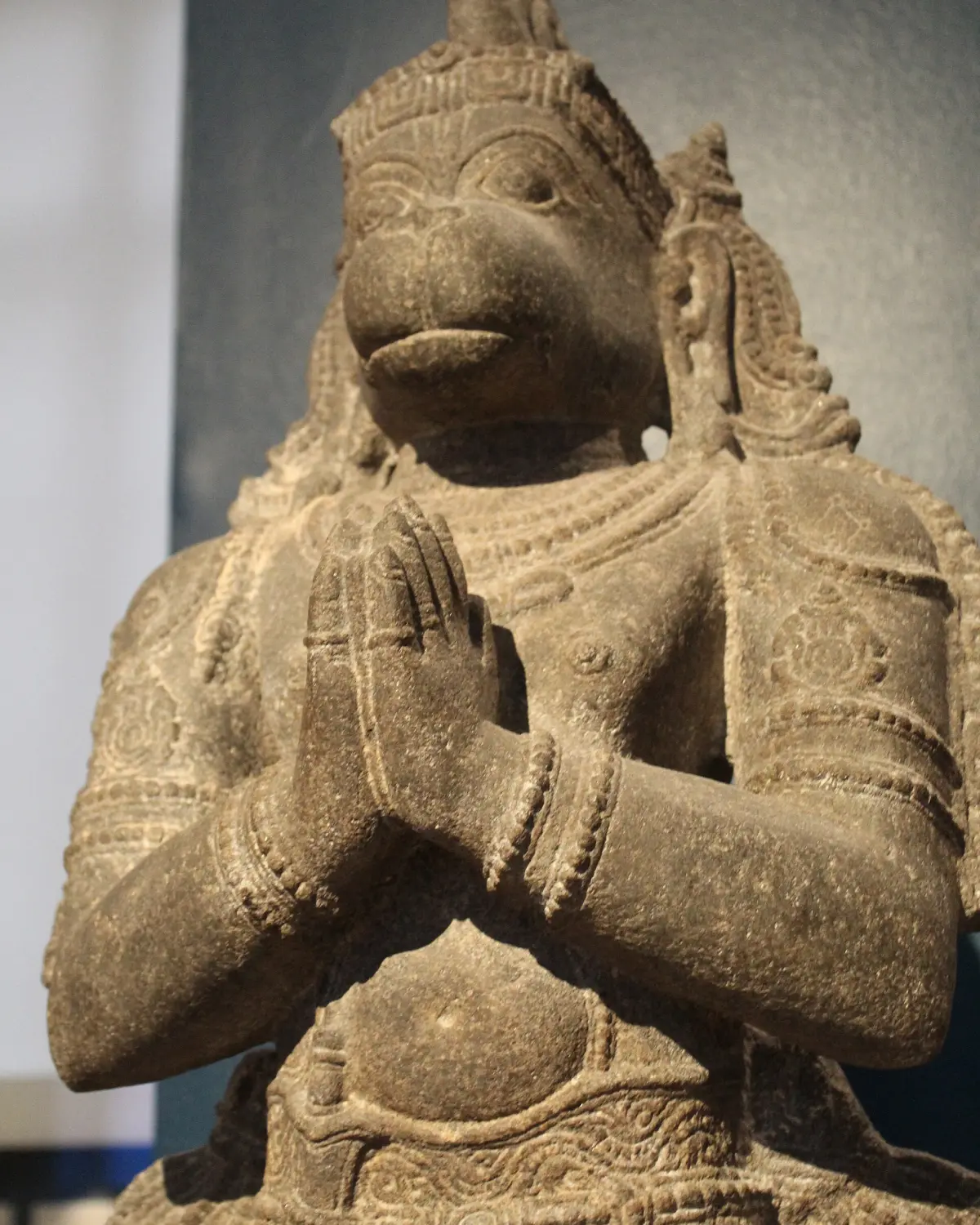
The Hanuman Chalisa is a devotional hymn of forty verses (chaupāī) to Hanumān, framed by two opening couplets (dohā) and one closing couplet. It is in Awadhi, an eastern Hindi language, and tradition attributes it to the poet Tulsīdās (sixteenth century), who signs the fortieth verse. Below: the full text, a readable transliteration and our own English translation.
The Hanumān Cālīsā is one of the most recited prayers of North India: in temples on Tuesday evenings, in homes at dawn, by students before an exam, by truck drivers before a long road. It is short, rhythmic, easy to memorise, and full of stories. Below is the whole text with a translation we made for this page, verse by verse.
What the Hanuman Chalisa is
- Language: Awadhi, an eastern form of Hindi, not Sanskrit. The metres are the dohā (couplet) and the chaupāī (four-part verse, printed as two lines).
- Structure: two opening dohās, forty chaupāīs, one closing dohā. Cālīsā means "the forty".
- Author: tradition attributes it to Goswami Tulsīdās, the sixteenth-century poet of the Rāmcaritmānas; the poem signs with his name in chaupāī 40.
- Subject: Hanumān, son of the wind god Vāyu and of Añjanā, the devoted servant of Rāma in the Rāmāyaṇa. The hymn praises his strength, wisdom and humility, and retells his great deeds: crossing the ocean, finding Sītā, burning Laṅkā, bringing the healing herb that saved Lakṣmaṇa.
Printed editions differ slightly in spelling and in a few words. We follow the reading most common today and note, below, the variants of an older Calcutta pamphlet edition.
The opening couplets (dohā)
श्रीगुरु चरन सरोज रज निज मनु मुकुरु सुधारि । बरनउँ रघुबर बिमल जसु जो दायकु फल चारि ॥
Shrī guru charana saroja raja, nija manu mukuru sudhāri | Baranaun Raghubara bimala jasu, jo dāyaku phala chāri ||
With the dust of my guru's lotus feet I polish the mirror of my mind, and I sing the pure glory of the best of the Raghus, which gives the four fruits of life.
बुद्धिहीन तनु जानिके सुमिरौं पवन कुमार । बल बुधि बिद्या देहु मोहिं हरहु कलेस बिकार ॥
Buddhi-hīna tanu jānike, sumirau Pavana-kumāra | Bala budhi bidyā dehu mohi, harahu kalesa bikāra ||
Knowing myself to be without understanding, I remember you, son of the Wind: give me strength, wisdom and knowledge, and take away my troubles and my faults.
The "four fruits" are the four aims of life of Indian tradition: dharma (right order), artha (wealth), kāma (pleasure) and mokṣa (liberation).
The forty verses (chaupāī)
| No. | Hindi (Awadhi) | Transliteration | Our translation |
|---|---|---|---|
| 1 | जय हनुमान ज्ञान गुन सागर । जय कपीस तिहुँ लोक उजागर ॥ | Jaya Hanumāna jñāna guna sāgara, jaya Kapīsa tihun loka ujāgara | Victory to Hanumān, ocean of wisdom and virtue; victory to the lord of the monkeys, light of the three worlds. |
| 2 | राम दूत अतुलित बल धामा । अंजनि पुत्र पवनसुत नामा ॥ | Rāma dūta atulita bala dhāmā, Anjani-putra Pavana-suta nāmā | Messenger of Rāma, home of matchless strength, called son of Añjanī and son of the Wind. |
| 3 | महाबीर बिक्रम बजरंगी । कुमति निवार सुमति के संगी ॥ | Mahābīra bikrama Bajarangī, kumati nivāra sumati ke sangī | Great hero, mighty, with a body like a thunderbolt, you dispel bad thoughts and keep company with good ones. |
| 4 | कंचन बरन बिराज सुबेसा । कानन कुंडल कुंचित केसा ॥ | Kanchana barana birāja subesā, kānana kundala kunchita kesā | Golden in colour, splendidly dressed, with rings in your ears and curling hair. |
| 5 | हाथ बज्र औ ध्वजा बिराजै । काँधे मूँज जनेऊ साजै ॥ | Hātha bajra au dhvajā birājai, kāndhe mūnja janeū sājai | In your hands shine the thunderbolt and the banner; a sacred thread of muñja grass adorns your shoulder. |
| 6 | संकर सुवन केसरीनंदन । तेज प्रताप महा जग बंदन ॥ | Sankara suvana Kesarī-nandana, teja pratāpa mahā jaga bandana | Born of Śiva, joy of Kesarī: your radiance and might are great, the whole world honours you. |
| 7 | बिद्यावान गुनी अति चातुर । राम काज करिबे को आतुर ॥ | Bidyāvāna gunī ati chātura, Rāma kāja karibe ko ātura | Learned, virtuous and very wise, always eager to do Rāma's work. |
| 8 | प्रभु चरित्र सुनिबे को रसिया । राम लखन सीता मन बसिया ॥ | Prabhu charitra sunibe ko rasiyā, Rāma Lakhana Sītā mana basiyā | You delight in hearing the deeds of the Lord; Rāma, Lakṣmaṇa and Sītā dwell in your heart. |
| 9 | सूक्ष्म रूप धरि सियहिं दिखावा । बिकट रूप धरि लंक जरावा ॥ | Sūkshma rūpa dhari Siyahi dikhāvā, bikata rūpa dhari Lanka jarāvā | Taking a tiny form you appeared to Sītā; taking a terrible form you set Laṅkā on fire. |
| 10 | भीम रूप धरि असुर सँहारे । रामचंद्र के काज सँवारे ॥ | Bhīma rūpa dhari asura sanhāre, Rāmachandra ke kāja sanvāre | Taking a fearsome form you destroyed the demons and accomplished Rāmacandra's tasks. |
| 11 | लाय सजीवन लखन जियाये । श्रीरघुबीर हरषि उर लाये ॥ | Lāya sajīvana Lakhana jiyāye, Shrī Raghubīra harashi ura lāye | Bringing the life-giving herb you revived Lakṣmaṇa, and Rāma, overjoyed, held you to his heart. |
| 12 | रघुपति कीन्ही बहुत बड़ाई । तुम मम प्रिय भरतहि सम भाई ॥ | Raghupati kīnhī bahuta barāī, tuma mama priya Bharatahi sama bhāī | The lord of the Raghus praised you greatly: "You are as dear to me as my brother Bharata." |
| 13 | सहस बदन तुम्हरो जस गावैं । अस कहि श्रीपति कंठ लगावैं ॥ | Sahasa badana tumharo jasa gāvain, asa kahi Shrīpati kantha lagāvain | "May the thousand-mouthed serpent sing your glory!" Saying this, the lord of Śrī embraced you. |
| 14 | सनकादिक ब्रह्मादि मुनीसा । नारद सारद सहित अहीसा ॥ | Sanakādika Brahmādi munīsā, Nārada Sārada sahita Ahīsā | Sanaka and the sages, Brahmā and the gods, the great seers, Nārada, Sarasvatī and the king of serpents… |
| 15 | जम कुबेर दिगपाल जहाँ ते । कबि कोबिद कहि सके कहाँ ते ॥ | Jama Kubera digapāla jahān te, kabi kobida kahi sake kahān te | …Yama, Kubera and the guardians of the directions: if they cannot tell your glory, how could poets and scholars? |
| 16 | तुम उपकार सुग्रीवहिं कीन्हा । राम मिलाय राज पद दीन्हा ॥ | Tuma upakāra Sugrīvahi kīnhā, Rāma milāya rāja pada dīnhā | You did Sugrīva a great service: you brought him to Rāma and gave him back his kingdom. |
| 17 | तुम्हरो मंत्र बिभीषन माना । लंकेस्वर भए सब जग जाना ॥ | Tumharo mantra Bibhīshana mānā, Lankesvara bhae saba jaga jānā | Vibhīṣaṇa followed your counsel and became king of Laṅkā, as the whole world knows. |
| 18 | जुग सहस्र जोजन पर भानू । लील्यो ताहि मधुर फल जानू ॥ | Juga sahasra jojana para bhānū, līlyo tāhi madhura phala jānū | The sun, thousands of leagues away: you swallowed it, taking it for a sweet fruit. |
| 19 | प्रभु मुद्रिका मेलि मुख माहीं । जलधि लाँघि गये अचरज नाहीं ॥ | Prabhu mudrikā meli mukha māhīn, jaladhi lānghi gaye acharaja nāhīn | Holding the Lord's ring in your mouth you leapt across the ocean: no wonder in that. |
| 20 | दुर्गम काज जगत के जेते । सुगम अनुग्रह तुम्हरे तेते ॥ | Durgama kāja jagata ke jete, sugama anugraha tumhare tete | All the hard tasks of this world become easy by your grace. |
| 21 | राम दुआरे तुम रखवारे । होत न आज्ञा बिनु पैसारे ॥ | Rāma duāre tuma rakhavāre, hota na āgyā binu paisāre | You guard Rāma's door: no one enters without your leave. |
| 22 | सब सुख लहै तुम्हारी सरना । तुम रच्छक काहू को डर ना ॥ | Saba sukha lahai tumhārī saranā, tuma rachchhaka kāhū ko dara nā | Whoever takes refuge in you finds every happiness; with you as protector, why fear anyone? |
| 23 | आपन तेज सम्हारो आपै । तीनों लोक हाँक तें काँपै ॥ | Āpana teja samhāro āpai, tīnon loka hānka ten kānpai | You alone can contain your own power; at your roar the three worlds tremble. |
| 24 | भूत पिसाच निकट नहिं आवै । महाबीर जब नाम सुनावै ॥ | Bhūta pisācha nikata nahin āvai, Mahābīra jaba nāma sunāvai | Ghosts and evil spirits do not come near when the name of the great hero is spoken. |
| 25 | नासै रोग हरै सब पीरा । जपत निरंतर हनुमत बीरा ॥ | Nāsai roga harai saba pīrā, japata nirantara Hanumata bīrā | Disease is destroyed and all pain removed for one who repeats without ceasing the name of the hero Hanumān. |
| 26 | संकट तें हनुमान छुड़ावै । मन क्रम बचन ध्यान जो लावै ॥ | Sankata ten Hanumāna chhurāvai, mana krama bachana dhyāna jo lāvai | Hanumān frees from trouble whoever fixes on him in thought, deed and word. |
| 27 | सब पर राम तपस्वी राजा । तिन के काज सकल तुम साजा ॥ | Saba para Rāma tapasvī rājā, tina ke kāja sakala tuma sājā | Above all is Rāma, the ascetic king, and all his work you brought to completion. |
| 28 | और मनोरथ जो कोई लावै । सोइ अमित जीवन फल पावै ॥ | Aura manoratha jo koī lāvai, soi amita jīvana phala pāvai | Whoever brings you any other wish receives the boundless fruit of life. |
| 29 | चारों जुग परताप तुम्हारा । है परसिद्ध जगत उजियारा ॥ | Chāron juga paratāpa tumhārā, hai parasiddha jagata ujiyārā | Your glory runs through the four ages; it is famous, the light of the world. |
| 30 | साधु संत के तुम रखवारे । असुर निकंदन राम दुलारे ॥ | Sādhu santa ke tuma rakhavāre, asura nikandana Rāma dulāre | You protect the good and the holy, destroyer of demons, darling of Rāma. |
| 31 | अष्ट सिद्धि नौ निधि के दाता । अस बर दीन जानकी माता ॥ | Ashta siddhi nau nidhi ke dātā, asa bara dīna Jānakī mātā | Giver of the eight powers and the nine treasures: this boon was granted you by Mother Sītā. |
| 32 | राम रसायन तुम्हरे पासा । सदा रहो रघुपति के दासा ॥ | Rāma rasāyana tumhare pāsā, sadā raho Raghupati ke dāsā | You hold the elixir of Rāma's name; may you remain forever the servant of the lord of the Raghus. |
| 33 | तुम्हरे भजन राम को पावै । जनम जनम के दुख बिसरावै ॥ | Tumhare bhajana Rāma ko pāvai, janama janama ke dukha bisarāvai | Through devotion to you one reaches Rāma, and forgets the sorrows of birth after birth. |
| 34 | अंत काल रघुबर पुर जाई । जहाँ जन्म हरि-भक्त कहाई ॥ | Anta kāla Raghubara pura jāī, jahān janma Hari-bhakta kahāī | At the end one goes to Rāma's city, and wherever one is born, is called a devotee of Hari. |
| 35 | और देवता चित्त न धरई । हनुमत सेइ सर्ब सुख करई ॥ | Aura devatā chitta na dharaī, Hanumata sei sarba sukha karaī | Even without keeping any other god in mind, one who serves Hanumān gains every happiness. |
| 36 | संकट कटै मिटै सब पीरा । जो सुमिरै हनुमत बलबीरा ॥ | Sankata katai mitai saba pīrā, jo sumirai Hanumata bala-bīrā | Troubles are cut away and all pain fades for one who remembers the mighty hero Hanumān. |
| 37 | जै जै जै हनुमान गोसाईं । कृपा करहु गुरुदेव की नाईं ॥ | Jai jai jai Hanumāna gosāīn, kripā karahu gurudeva kī nāīn | Victory, victory, victory, lord Hanumān! Be gracious to me as a guru is. |
| 38 | जो सत बार पाठ कर कोई । छूटहि बंदि महा सुख होई ॥ | Jo sata bāra pātha kara koī, chhūtahi bandi mahā sukha hoī | Whoever recites this a hundred times is freed from bondage and finds great joy. |
| 39 | जो यह पढ़ै हनुमान चलीसा । होय सिद्धि साखी गौरीसा ॥ | Jo yaha parhai Hanumāna chalīsā, hoya siddhi sākhī Gaurīsā | Whoever reads this Hanumān Chālīsā attains perfection: Śiva, lord of Gaurī, is witness. |
| 40 | तुलसीदास सदा हरि चेरा । कीजै नाथ हृदय महँ डेरा ॥ | Tulasīdāsa sadā Hari cherā, kījai nātha hridaya mahan derā | Tulsīdās, ever the servant of Hari, prays: Lord, make your dwelling in my heart. |
The closing couplet
पवनतनय संकट हरन मंगल मूरति रूप । राम लखन सीता सहित हृदय बसहु सुर भूप ॥
Pavana-tanaya sankata harana, mangala mūrati rūpa | Rāma Lakhana Sītā sahita, hridaya basahu sura bhūpa ||
Son of the Wind, remover of troubles, embodiment of all that is auspicious: dwell in my heart, king of the gods, together with Rāma, Lakṣmaṇa and Sītā.
Variants between editions
Printed texts of the Chālīsā are not all identical. In the older Calcutta pamphlet we used as a check (Shri Baidyanath Ayurved Bhavan, scanned on Internet Archive), for example:
- verse 5 reads hātha bajra aru dhvajā and janeū chhājai (same meaning: "and", "adorns");
- verse 28 reads tāsu amita jīvana phala pāvai (tāsu, "his", instead of soi, "that one");
- verse 32 reads sādara tuma Raghupati ke dāsā ("respectfully you are the servant of Rāma");
- verse 40 reads kījai dāsa hridaya mahan derā, a slightly different wording of the last line.
None of these changes the meaning of the hymn. If you learn from a teacher or a family tradition, keep the reading you received.
The stories behind the verses
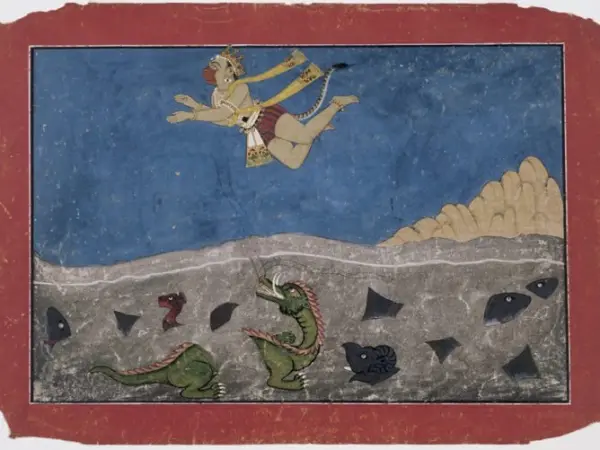
The Chālīsā is a summary of the Rāmāyaṇa seen through Hanumān's eyes. Verse 9 recalls how he shrank to appear before Sītā in the Aśoka grove, and how, his tail set alight by Rāvaṇa's men, he burned the city. Verse 11 is the famous episode of the sañjīvanī herb: when Lakṣmaṇa lay dying on the battlefield, Hanumān flew to the Himālaya and, unable to recognise the plant, brought back the whole mountain. Verse 18 tells the childhood myth, already in the Rāmāyaṇa (4.65.19, quoted on the Hanumānāsana page), in which the infant Hanumān leapt at the rising sun, thinking it a ripe fruit. Verse 19 is the leap across the ocean to Laṅkā, carrying Rāma's ring as a sign for Sītā.
Behind the stories is one idea that makes Hanumān dear to yogis: the greatest strength placed entirely at the service of love. Across North India he is honoured in the akhāṛā, the traditional wrestlers' gymnasium, and the posture Hanumānāsana, the splits, imitates his leap. Patañjali, in a different register, says that by concentrating on strengths one gains "the strength of an elephant and the like" (baleṣu hasti-balādīni, Yoga Sutra 3.24); his commentator Vyāsa adds, among the examples, the strength of the wind, Hanumān's father.
How to recite the Hanuman Chalisa
There is no single rule. A simple way that respects common practice:
- Choose a time. Many people recite in the morning after washing, or in the evening at lamp-lighting. Tuesday and Saturday are traditionally Hanumān's days.
- Sit facing an image of Hanumān or Rāma if you have one, or simply sit quietly. Light a lamp or incense if that is part of your practice.
- Begin with the two dohās, then the forty chaupāīs, then the closing dohā. Read slowly enough that you understand each line; the translation above is there for that.
- Count if you wish. Once is enough. Verse 38 speaks of a hundred recitations, and some people recite it many times on special days, keeping count on a mālā.
- End in silence for a minute, with the last line: "Lord, make your dwelling in my heart."
If you are new to devotional recitation, the page on mantra meditation explains how repetition steadies the mind, and the mantras page gathers the other great mantras of the tradition.
Questions people ask
Who wrote the Hanuman Chalisa?
Tradition attributes it to Goswami Tulsīdās, the sixteenth-century poet of the Rāmcaritmānas, and the poem signs with his name in the fortieth verse: 'Tulsīdās, ever the servant of Hari'. It is written in Awadhi, the same language as the Rāmcaritmānas.
Why is it called 'Chalisa'?
Cālīsā comes from cālīs, forty: the hymn has forty verses in the chaupāī metre. The opening and closing couplets (dohā) are not counted in the forty.
How long does it take to recite the Hanuman Chalisa?
Read aloud at a calm pace, around ten minutes; sung versions vary with the tune and the tempo. Many people recite it once a day, often on Tuesday and Saturday, days traditionally devoted to Hanumān.
Can I recite the Hanuman Chalisa in English?
You can read the meaning in English, and that helps the words come alive. The recitation itself is traditionally done in the original Awadhi, which is why we give a readable transliteration: you can follow the sound even if you cannot read Devanagari.
Does verse 18 give the distance from the Earth to the Sun?
Some people multiply yuga × sahasra × yojana and arrive near the modern figure. The verse itself tells a myth: the child Hanumān leapt at the sun, taking it for a sweet fruit. The units are traditional and their values vary between texts, so we read the verse as poetry, not as astronomy.
Can the Hanuman Chalisa cure illness?
Verse 25 says that Hanumān removes disease and pain for those who repeat his name: this is the language of prayer and of faith, not a medical claim. Recite it for devotion, courage and steadiness of mind, and keep seeing your doctor for any health problem.
Sources
- Hanuman Chalisa, Sankat Mochan Hanumanashtak, by Tulsidas, printed pamphlet edition (Calcutta, Shri Baidyanath Ayurved Bhavan), scan on Internet Archive checked October 20, 2026
- Shri Hanuman Chalisa, Gita Press booklet no. 227 (Gorakhpur), scan on Internet Archive: the common reading followed here checked October 20, 2026
- Patañjali, Yogasūtra 3.24 on strength (balaṃ), Sanskrit text (GRETIL, University of Göttingen) checked October 20, 2026
- Philip Lutgendorf, Hanuman's Tale: The Messages of a Divine Monkey (Oxford University Press, 2007), Open Library record checked October 20, 2026