जिह्वाशोधनjihvā-śodhana · cleansing of the tongue
Tongue scraping, the morning cleansing of the yogi
6 min read · Updated October 20, 2026 · sources checked October 20, 2026 · Editorial: The Yogide team
In short
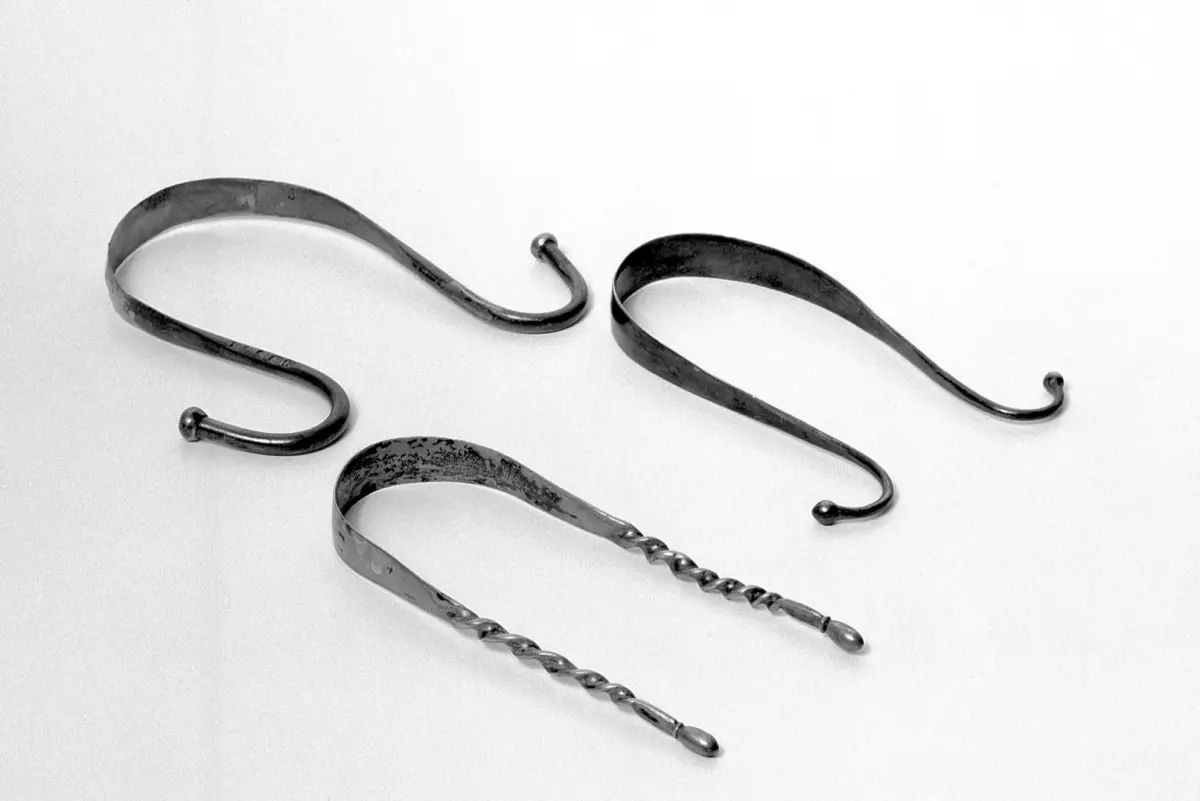
Tongue scraping means drawing a smooth scraper from the back of the tongue to the tip, gently, five to ten times each morning after brushing, rinsing between strokes. It reduces morning breath and tongue coating for a few hours, but a 2019 Cochrane review rates the evidence as very uncertain. In hatha yoga, the Gheraṇḍa Saṃhitā describes a tongue cleansing done with the fingers.
How to scrape your tongue
- Brush your teeth first, as usual. Scraping is an addition to brushing, not a replacement.
- Hold the scraper by both ends (a U-shaped scraper) or by the handle, edge turned towards the tongue.
- Stick the tongue out and breathe out through the mouth. Place the edge as far back as you can without gagging. Breathing out slowly helps quiet the gag reflex.
- Draw forward to the tip, with light pressure, in one stroke. The tongue should not change colour under the edge.
- Rinse the scraper under the tap, and repeat five to ten times, covering the left, middle and right of the tongue.
- Rinse your mouth with water, wash the scraper and let it dry.
It takes under a minute. Once a day, in the morning, is enough. Morning is when the coating is thickest, after hours of lower saliva flow.
What it does, and what it does not
The coating that builds up at the back of the tongue holds food debris, shed cells and bacteria. Those bacteria produce sulphur gases, the main source of the smell of morning breath. Removing the coating mechanically reduces both the coating and the smell. That is the whole, unglamorous mechanism.
| Study | What was tested | What it found | How sure |
|---|---|---|---|
| Van der Sleen, 2010: systematic review, 5 publications (7 experiments) | Tongue scraper or tongue brush added to toothbrushing, against toothbrushing alone | All experiments showed less breath odour and less coating with tongue cleaning; data on chronic halitosis insufficient | Small studies |
| Oliveira-Neto, 2013: crossover trial, 20 healthy volunteers | Two scrapers, two mouthwashes, toothbrushing, against morning breath | The scraper reduced bad breath at once, for up to 2 hours; brushing and chlorhexidine lasted longer | One small trial |
| Kumbargere Nagraj, 2019: Cochrane review, 44 trials, 1,809 people | Every treatment for halitosis of oral origin | Mechanical tongue cleaning against none: a small difference in odour scores (2 trials, 46 people), very low-certainty evidence; no treatment shown superior to the others | Very uncertain |
The Cochrane review replaced an earlier 2006 Cochrane review devoted to tongue scraping alone, which has since been withdrawn. Its conclusion is sober: there is some evidence that tongue cleaning helps, but the trials are small, short and at unclear or high risk of bias. Read the effect as a fresher mouth for a few hours, not as a treatment.
What tongue scraping does not do, as far as any study shows: remove "toxins" from the body, boost digestion, improve immunity or help weight loss. Persistent bad breath usually comes from gum disease, tooth decay, dry mouth or another medical cause, which a scraper hides at best.
Tongue cleansing in the yoga texts
The Gheraṇḍa Saṃhitā, a hatha yoga manual that scholars date to the late seventeenth or eighteenth century, opens with the cleansing actions. Among the dhauti, "washings", it lists five kinds of danta-dhauti, cleaning of the teeth area:
दन्तमूलं जिह्वामूलं रन्ध्रं च कर्णयुग्मयोः । कपालरन्ध्रं पञ्चेति दन्तधौतिर्विधीयते ॥
danta-mūlaṃ jihvā-mūlaṃ randhraṃ ca karṇa-yugmayoḥ | kapāla-randhraṃ pañceti danta-dhautir vidhīyate ||
The root of the teeth, the root of the tongue, the openings of the two ears and the opening of the skull: this, in five, is the prescribed cleansing of the teeth.
The teeth are rubbed with catechu powder or clean earth, "every day, in the morning" (1.27-1.28). Then comes the tongue:
अथातः संप्रवक्ष्यामि जिह्वाशोधनकारणम् । जरामरणरोगादीन्नाशयेद्दीर्घलम्बिका ॥
athātaḥ saṃpravakṣyāmi jihvā-śodhana-kāraṇam | jarā-maraṇa-rogādīn nāśayed dīrgha-lambikā ||
Now I shall explain the means of cleansing the tongue. A long tongue destroys old age, death, disease and the rest.
तर्जनीमध्यमानामा अङ्गुलित्रययोगतः । वेशयेद्गलमध्ये तु मार्जयेल्लम्बिकामलम् । शनैः शनैर्मार्जयित्वा कफदोषं निवारयेत् ॥
tarjanī-madhyamānāmā aṅguli-traya-yogataḥ | veśayed gala-madhye tu mārjayel lambikā-malam | śanaiḥ śanair mārjayitvā kapha-doṣaṃ nivārayet ||
Joining the three fingers, index, middle and ring, one inserts them into the throat and wipes away the impurity of the tongue; wiping slowly, slowly, one removes the excess of phlegm.
So the yogic jihvā-śodhana is not a scraper: it is the three joined fingers, reaching the root of the tongue. And the text has a second aim that most wellness articles leave out. The next verses say to rub the tongue with butter, to "milk" it again and again, and to draw its tip out with an iron instrument, morning and evening, so that it grows long (1.31-1.32). Śrīśa Chandra Vasu's 1914-1915 translation, which numbers the verses the same way, names the whole practice "Tongue-Dhauti"; in his introduction he notes that the advantages of cleaning the teeth and the tongue "are obvious", and that the lengthening of the tongue "is necessary for performing hybernation", the long suspension of the breath. A long tongue is what khecarī mudrā needs, the gesture in which the tongue is turned back into the cavity above the palate: see khecarī mudrā.
Two words of honesty. The Sanskrit lambikā is given by the Monier-Williams dictionary as "the uvula or soft palate"; here, in context, it is the tongue, and Vasu translates it so. And the elongation part is not something to try: it belongs to a teacher-led tradition, and pulling the tongue with an instrument can injure it. What can be kept from the text, safely, is the idea of a daily cleansing of the tongue's root, first thing in the morning.
The scraper in the daily routine
The metal scraper most people know comes from the wider Indian daily routine, dinacaryā, and from Ayurveda, rather than from the hatha texts. The Aṣṭāṅgahṛdaya, the classical Ayurvedic compendium, opens its chapter on the daily routine with rising at brāhma muhūrta, before dawn, and chewing a twig of astringent, pungent or bitter wood to clean the teeth (Sūtrasthāna 2.1-2.3). Tongue scraping sits naturally beside these first gestures of the day.
A simple yogic morning, in order:
- Rise, and drink a glass of water if you like.
- Brush the teeth, then scrape the tongue as described above.
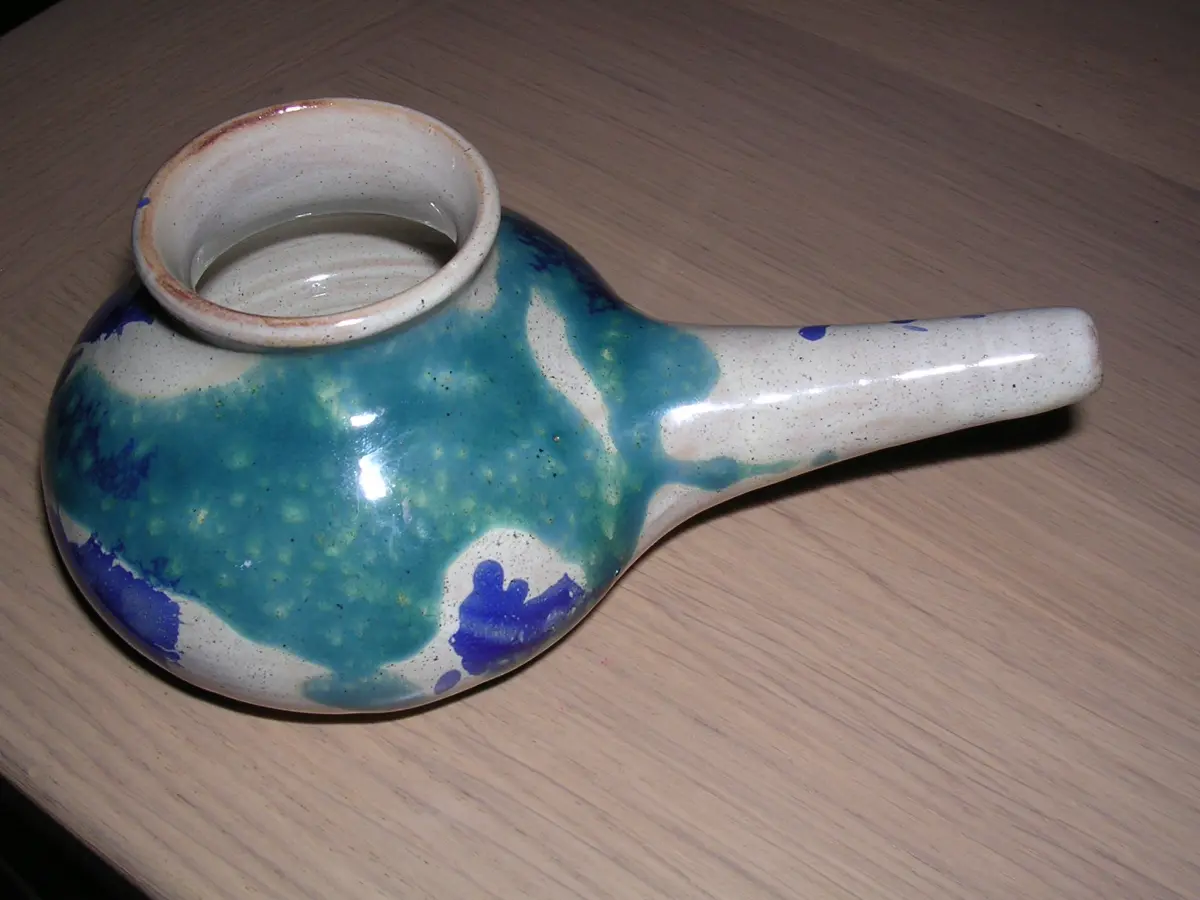
- If you practise it, jala neti with sterile or boiled water.
- A few minutes of quiet breathing, then postures: our page on morning yoga gives a sequence.
The other cleansing actions of hatha yoga, some of them demanding, are on the page ṣaṭkarma, the six cleansing actions.
Questions people ask
Is tongue scraping better than brushing the tongue?
Neither has clearly won. The 2010 systematic review grouped scrapers and tongue brushes together and found both reduced breath odour and coating when added to toothbrushing. Some people find a scraper gags them less than a brush; use whichever you can use gently every day.
Does tongue scraping remove toxins?
No study shows that. What the scraper removes is the coating on the back of the tongue: food debris, shed cells and bacteria, the main source of morning breath. Talk of 'toxins' or 'ama' leaving the body through the tongue is a belief, not a measured effect.
How often should I scrape my tongue?
Once a day is enough, usually in the morning. The NHS suggests cleaning the tongue gently once a day with a scraper or cleaner, as part of normal oral hygiene. Scraping several times a day or pressing hard does not help and can irritate the tongue.
Copper or stainless steel?
We found no trial comparing metals. Choose a scraper with smooth, rounded edges that you can wash and dry easily; stainless steel and copper both work, plastic too. Replace it if the edge becomes rough or nicked.
Can tongue scraping cure bad breath?
It reduces it for a while, which is not the same. In a 2013 crossover trial, a tongue scraper cut morning bad breath for up to two hours. Persistent bad breath usually comes from the gums, the teeth or another cause, and needs a dentist.
Yogide explains what the texts and the studies say; it is not medical advice. If you have a health condition, are pregnant or feel pain, talk to your doctor before practising, and stop any posture that hurts.
Sources
- Kumbargere Nagraj S, Eachempati P, Uma E et al. Interventions for managing halitosis. Cochrane Database of Systematic Reviews, 2019 DOI 10.1002/14651858.CD012213.pub2 PMID 31825092 checked October 20, 2026
- Van der Sleen MI, Slot DE, Van Trijffel E et al. Effectiveness of mechanical tongue cleaning on breath odour and tongue coating: a systematic review. International Journal of Dental Hygiene, 2010 DOI 10.1111/j.1601-5037.2010.00479.x PMID 20961381 checked October 20, 2026
- Oliveira-Neto JM, Sato S, Pedrazzi V. How to deal with morning bad breath: a randomized, crossover clinical trial. Journal of Indian Society of Periodontology, 2013 DOI 10.4103/0972-124X.124497 PMID 24554886 checked October 20, 2026
- Bad breath, NHS (page last reviewed 5 June 2025) checked October 20, 2026
- Symptoms of mouth cancer, NHS (page last reviewed 19 June 2023) checked October 20, 2026
- Gheraṇḍasaṃhitā, Sanskrit text ed. Peter Thomi (GRETIL, University of Göttingen), 1.26-1.32 checked October 20, 2026
- The Gheranda Samhita, translated by Srisa Chandra Vasu, Sacred Books of the Hindus vol. XV (Allahabad, 1914-1915), Internet Archive checked October 20, 2026
- Vāgbhaṭa, Aṣṭāṅgahṛdaya, Sūtrasthāna, Sanskrit text (GRETIL), chapter 2 checked October 20, 2026