जलनेतिjala-neti · nasal cleansing with water
Jala neti, rinsing the nose with a neti pot
3 min read · Updated October 17, 2026 · sources checked October 17, 2026
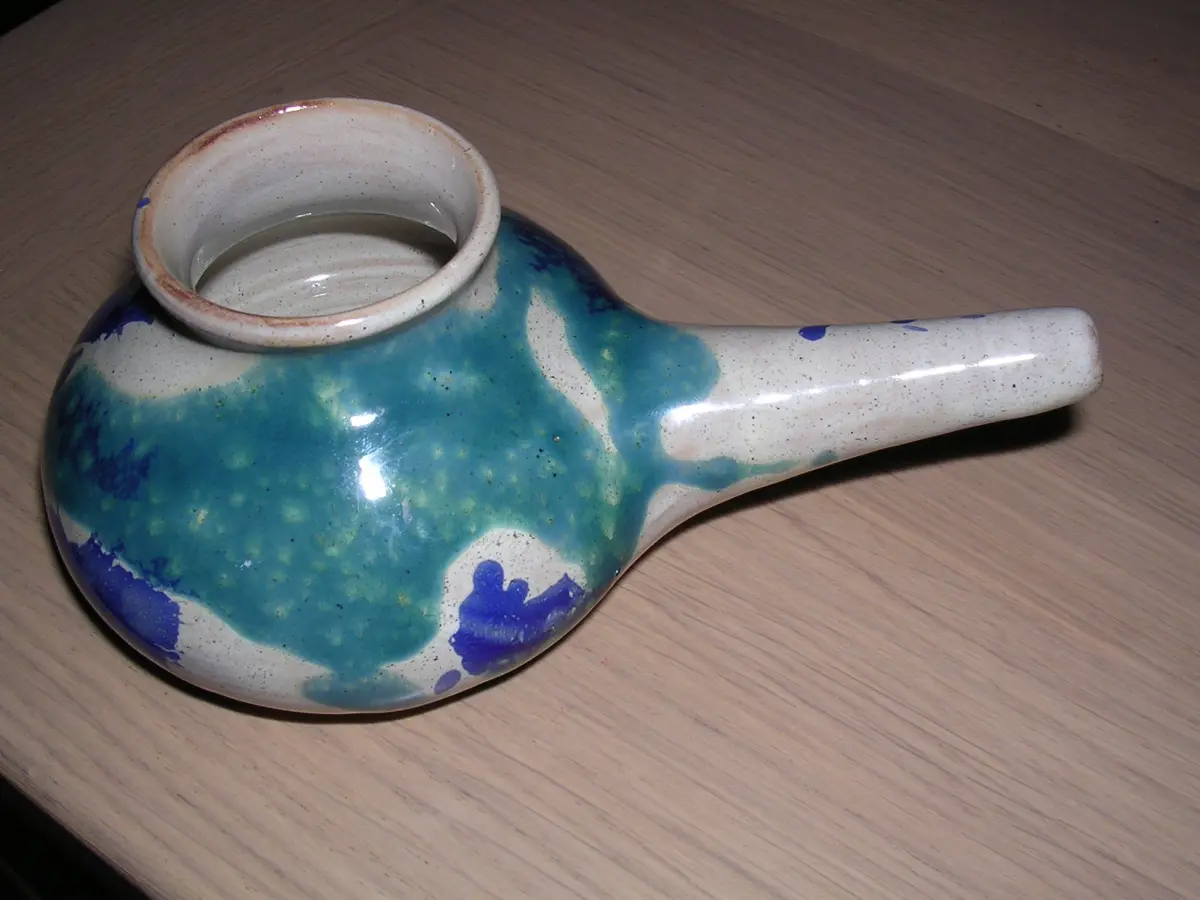
In short
Jala neti is rinsing the nose with lukewarm salt water from a small spouted pot: the head tilted to one side, water poured into the upper nostril flows out of the lower one, then the other side. Use only sterile, distilled or boiled and cooled water, never straight tap water: rare but fatal amoebic infections have followed rinses with tap water.
What jala neti is
Neti (नेति) is one of the six cleansing actions of hatha yoga; jala (जल) means water. The Hatha Yoga Pradipika describes the older form, a soft thread passed through the nose and out of the mouth (sūtra neti, 2.29). The Gheraṇḍa Saṃhitā already uses water: "Draw the water through the two nostrils and expel it through the mouth slowly and slowly" (1.58, Vasu, 1914-1915), a practice it classes under kapālabhāti. The rinse from one nostril to the other, with a small spouted pot (lota in Hindi), is the form most taught in yoga schools today.
The water: the one rule that matters
| Option | How |
|---|---|
| Distilled or sterile water | bought, labelled "distilled" or "sterile" |
| Boiled tap water | at a rolling boil for at least 1 minute according to the CDC (3 minutes above about 2,000 metres); the FDA advises 3 to 5 minutes. Then cooled to lukewarm |
| Stored boiled water | in a clean, covered container; the FDA says to use it within 24 hours |
Why it matters: in 2011 two adults in Louisiana died of primary amoebic meningoencephalitis, an almost always fatal brain infection, after regular sinus rinses with tap water. Naegleria fowleri was found in the water of both homes (Yoder et al., 2012). The amoeba is harmless when swallowed but dangerous when it goes up the nose. Such cases are rare; the precaution is simple.
The salt
Aim for the body's own salinity: about 0.9 per cent, 9 grams of fine, non-iodised salt per litre (4.5 g per half litre). Dissolve it completely. Ready-made saline sachets are a simple way to get it right. Plain water stings; very salty water irritates.
Steps
- Prepare lukewarm saline in a clean neti pot, at body temperature (test a drop on the wrist).
- Lean over a sink, head forward, then tilt the head to the left so that the right nostril is uppermost. Keep the forehead and chin level.
- Breathe through the mouth, calmly, throughout.
- Place the spout gently in the upper (right) nostril, sealing it.
- Raise the pot. The water flows through the nose and out of the lower (left) nostril. Use about half the pot.
- Blow gently through both nostrils, without pinching one.
- Repeat on the other side, head tilted to the right.
- Dry the nose: bend forward, let any water drain, then breathe out gently through the nose a few times, standing, then bending to each side. Water left in the sinuses can drip out later.
- Clean the pot after use, and let it dry completely.
Rhythm for beginners and progression
- First week: once a day, in the morning, a half pot per side.
- Then: once a day, or only when the nose is congested. There is no benefit in rinsing several times a day without a reason.
- Before pranayama: many practitioners rinse first; dry the nose well before any breathing practice.
What research shows
- Chronic rhinosinusitis. A 2016 Cochrane review found only two usable trials (116 adults). In one of them (76 adults), daily large-volume (150 ml) hypertonic (2%) saline irrigation improved disease-specific quality of life compared with usual care, with low-quality evidence at three months and very low at six; 23% of the saline group had side effects, including nosebleeds.
- Allergic rhinitis. A 2018 Cochrane review of 14 trials (747 children and adults) found that saline irrigation may improve symptoms compared with no irrigation for up to three months, with low-quality evidence; adverse effects were poorly recorded, and none were reported in the saline groups of the studies that mentioned them.
Saline rinsing is a reasonable comfort measure for a congested nose; it does not "detoxify" and does not replace treatment. If symptoms last more than a few weeks, see a doctor.
Common mistakes
- Tap water or a pot left wet: the main safety risks.
- Tilting the head back instead of to the side: the water runs into the throat.
- Breathing through the nose during the rinse.
- Blowing hard or pinching one nostril afterwards: it can push water towards the ears.
- Not drying the nose before pranayama or before going out in the cold.
Questions people ask
Can I use tap water in a neti pot?
No, not straight from the tap. The FDA and the CDC advise distilled or sterile water, or tap water boiled and cooled. The CDC recommends boiling for one minute (three above 2,000 metres) and storing it covered.
How much salt should I put in a neti pot?
Enough to match the body's own saltiness: about 0.9 per cent, or 9 grams of non-iodised salt per litre of water. Too little stings; too much irritates. Ready-made sachets give the right dose.
How often can I do jala neti?
Many people do it once a day, in the morning, or only when the nose is blocked. If you use it for a medical problem, ask your doctor how often.
Is jala neti in the Hatha Yoga Pradipika?
The Hatha Yoga Pradipika describes neti with a thread (2.29). The water versions come later: the Gheraṇḍa Saṃhitā describes drawing water in through the nostrils and out through the mouth (1.58). The nostril-to-nostril rinse is the form most taught today.
Sources
- Is Rinsing Your Sinuses With Neti Pots Safe? U.S. Food and Drug Administration (updated 28 April 2025) checked October 17, 2026
- How to Safely Rinse Sinuses, Naegleria fowleri Infection, Centers for Disease Control and Prevention checked October 17, 2026
- Yoder JS et al. Primary amebic meningoencephalitis deaths associated with sinus irrigation using contaminated tap water. Clinical Infectious Diseases, 2012 DOI 10.1093/cid/cis626 PMID 22919000 checked October 17, 2026
- Chong LY et al. Saline irrigation for chronic rhinosinusitis. Cochrane Database of Systematic Reviews, 2016 DOI 10.1002/14651858.CD011995.pub2 PMID 27115216 checked October 17, 2026
- Head K et al. Saline irrigation for allergic rhinitis. Cochrane Database of Systematic Reviews, 2018 DOI 10.1002/14651858.CD012597.pub2 PMID 29932206 checked October 17, 2026
- Srisa Chandra Vasu (tr.), The Gheranda Samhita, Sacred Books of the Hindus vol. XV (1914-1915), Internet Archive checked October 17, 2026
Yogide explains what the texts and the studies say; it is not medical advice. If you have a health condition, are pregnant or feel pain, talk to your doctor before practising, and stop any posture that hurts.